
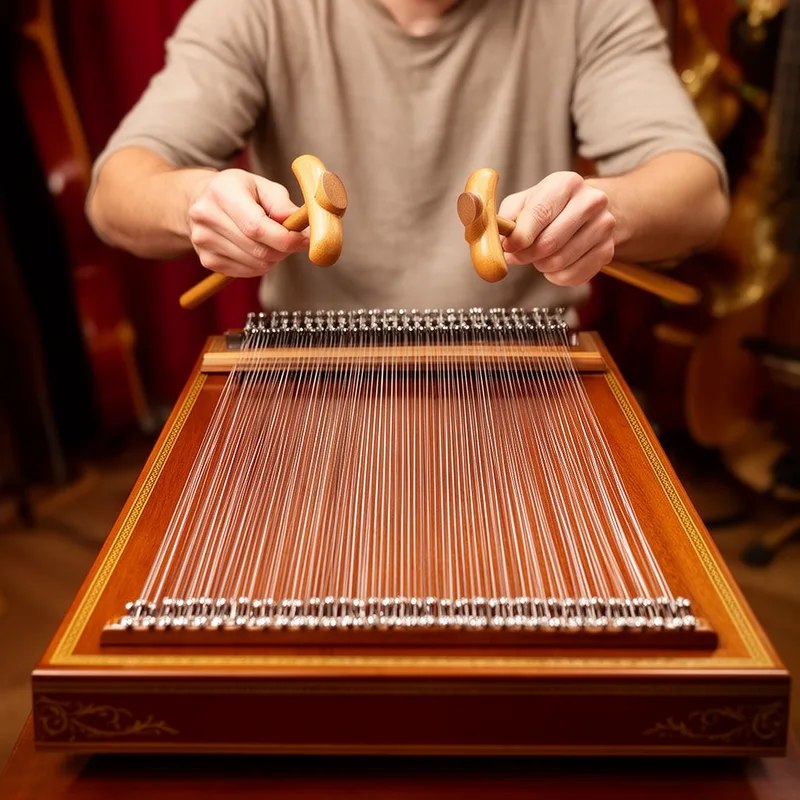
cimbalom


 1
9.9
- noun
- /ˈsɪmbəˌlɒm/
- During the concert, the cimbalom captured the audience's attention with its unique melodies.
Examples
-
The cimbalom produces a rich, resonant sound that adds depth to traditional folk music.
-
When it is included, as performed by stage ensembles, the small string band becomes a large instrumental ensemble directed by a maestro, incorporating multiple violins, accordions, taragot, cimbalom, and so on.
Academic text (2016) -
The hammered dulcimer (cimbal/cymbal/cimbalom) is one of the few elements of Moravian folk music preserved in Texas.
Academic text (1996) -
In many Central European folk bands, the cimbalom is played alongside violins and flutes.
Surface Forms
Etymology
The word cimbalom comes from Eastern European names like țambal and from older Middle Eastern words such as tambur, which also gave English tambourine. A helpful way to remember cimbalom is to think of a 'struck' instrument like a drum, because it is a large string instrument played by hitting the strings with small mallets.