
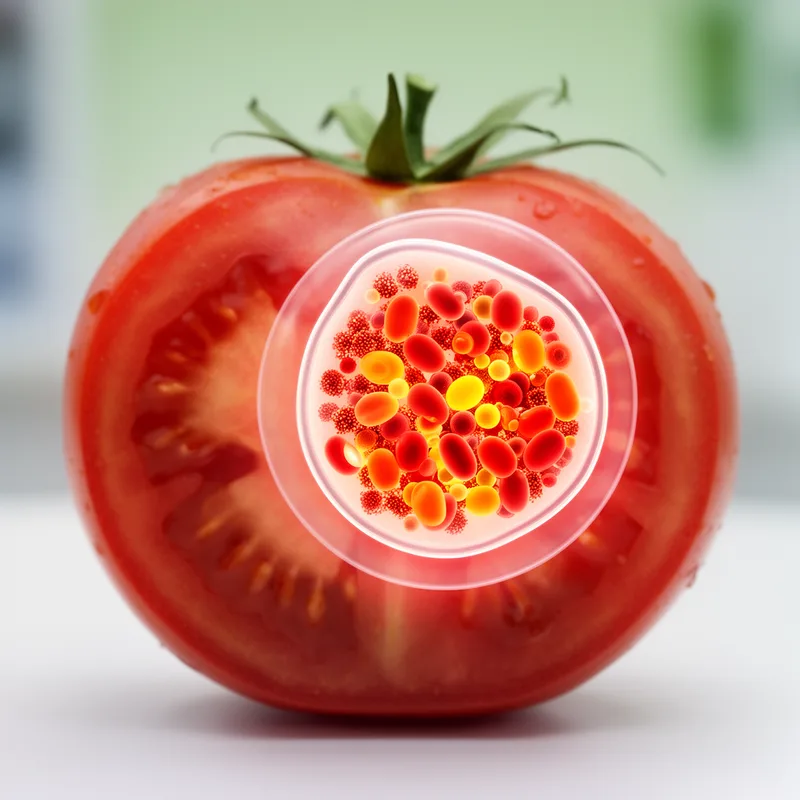
chromoplast


 1
9.9
A part of a plant cell that contains red, orange, or yellow pigments and gives color to fruits and flowers
- noun
- /ˈkroʊməˌplæst/
- Specialized
:
cromoplasto
- Yellow, orange, or red pigmentation, as seen in oranges and tomatoes, arises from the conversion of chloroplasts to chromoplasts.
Examples
-
In ripe tomatoes, chromoplasts develop to produce their characteristic red color.
-
The bright orange color of carrots is due to the presence of chromoplasts in their cells.
-
Many flowers display vivid hues that come from chromoplasts, enhancing their beauty.
Surface Forms
chromoplast singular
chromoplasts plural
Morphology
chromoplast = chromo + plast
The parts are specialized scientific combining forms (chromo- 'color', -plast 'form/structure') that are not recognizable as independent everyday English words to a B1 learner, so the meaning is not derivable from common base words.
Etymology
Chromoplast joins chromo- 'color' and -plast 'to form', the same root you see in plastic. So a chromoplast is a 'color-formed' part of a plant cell that holds pigments and gives fruits and flowers bright colors.