
chromolithography


 1
9.9
- noun
- /ˌkroʊməˌlɪθəˈɡrɑfi/
- Specialized
Examples
-
On the other side of the coin, chromolithography has lost its position as part of the "fine arts" (pp. 187-88).
Academic text (1995) -
This comprehensive definition includes a number of printing technologies, ranging from traditional chromolithography to more modern photo offset printing processes.
Academic text (2009) -
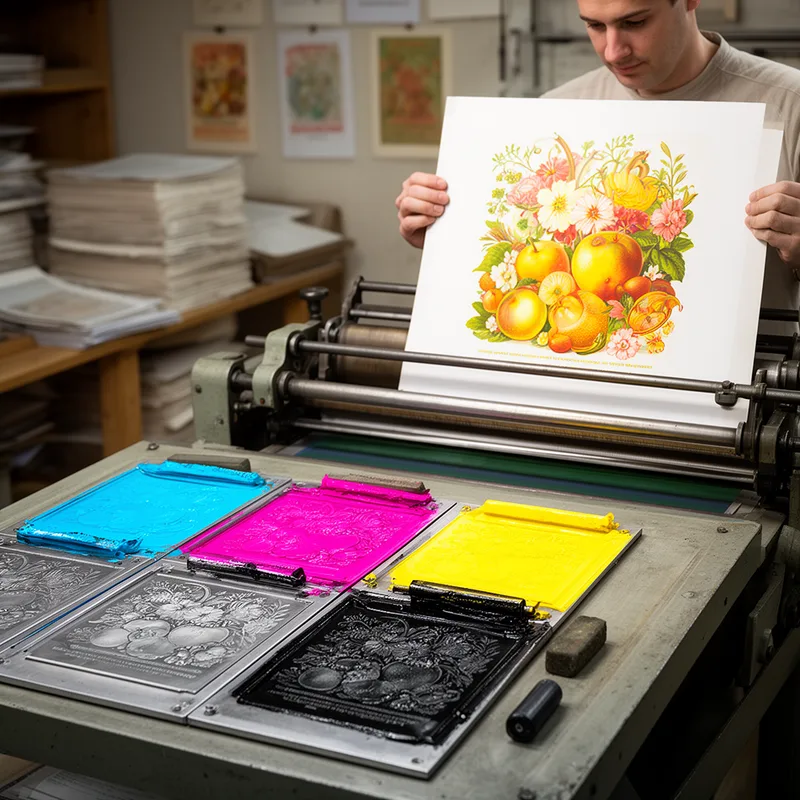
The process of chromolithography made it possible to produce colorful illustrations in books and advertisements.
-
Artists and publishers embraced chromolithography for its ability to create vibrant, multi-colored images efficiently.
-
With chromolithography, printing became more affordable, allowing wider access to printed art and advertisements.
How Colorful
- Specialized
1
9.9

- Specialized
1
9.9
89
1.0
1
7.2
1
6.3
Surface Forms
Morphology
chromolithography = lithography (semi-transparent) = chromo + lithography
Built transparently from the combining form 'chromo-' (colour) and the technical term 'lithography', but both elements are technical combining forms that may be unfamiliar to average learners.
Etymology
The word chromolithography joins Greek parts: chromo- ('color'), litho- ('stone'), and -graphy ('writing' or 'drawing'), the same ending as in photography. So it literally means 'color-stone-drawing', a handy image: printers used flat stones to add each color and make multi-colored pictures, which is why the word means the old method of color printing.