
chromolithographic


 1
9.9
- adjective
- /ˌkroʊməˌlɪθəˈgræfɪk/
- Specialized
- She was fascinated by the detailed chromolithographic illustrations in the vintage book on botanical species.
- chromolithographic imagery
- chromolithographic image
Examples
-
There will be the unique opportunity to view the beauty of chromolithographic printing in the reproduction of Thomas Moran's watercolors of the American West, said to be the greatest example of such printing ever done—a spectacularly beautiful.
Blog text (26) -
Today, foreign and locally produced chromolithographic images (or color prints) depicting Christian religious figures are readily available in Ethiopia and have become one of the most popular and prevalent art forms in the country.
Academic text (2009) -
Thus, the chromolithographic image is ever evolving.
Academic text (1999) -
The chromolithographic art form is no exception.
Academic text (1999) -
In fact, Aleqa Berhane and his wife Tsehai have several chromolithographic images hanging on the walls of their living room.
Academic text (2009) -
The museum displayed several chromolithographic prints from the 19th century that showcased vibrant colors.
-
As an artist, he specializes in producing chromolithographic images that blend traditional and modern techniques.
Synonyms
 1
7.5
Made using a flat stone or metal plate to print images
Surface Forms
Morphology
chromolithographic = chromolithography (semi-transparent) = chromolithography + ic
The adjective is formed regularly by the suffix '-ic' from 'chromolithography', but the base is technical and built from Greek combining forms that are unlikely to be known by an average B1 learner.
Etymology
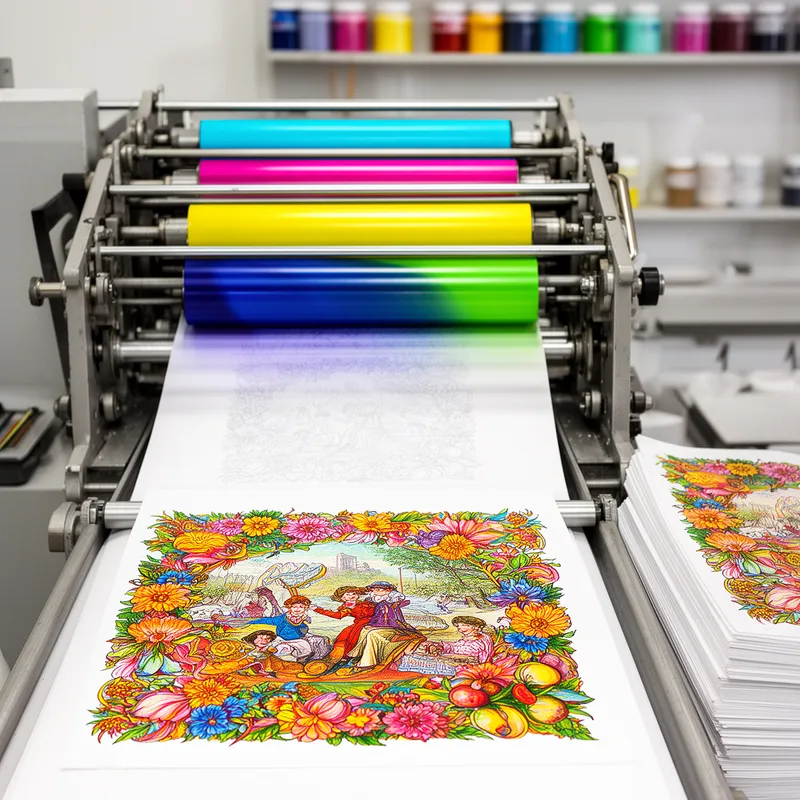
Chromolithographic comes from three parts: chromo- meaning 'color', litho- meaning 'stone', and -graphic meaning 'to write or print', as in photograph. It originally named a way of printing that used flat stones to add each color, so today it describes colorful prints made by that stone-printing method.