
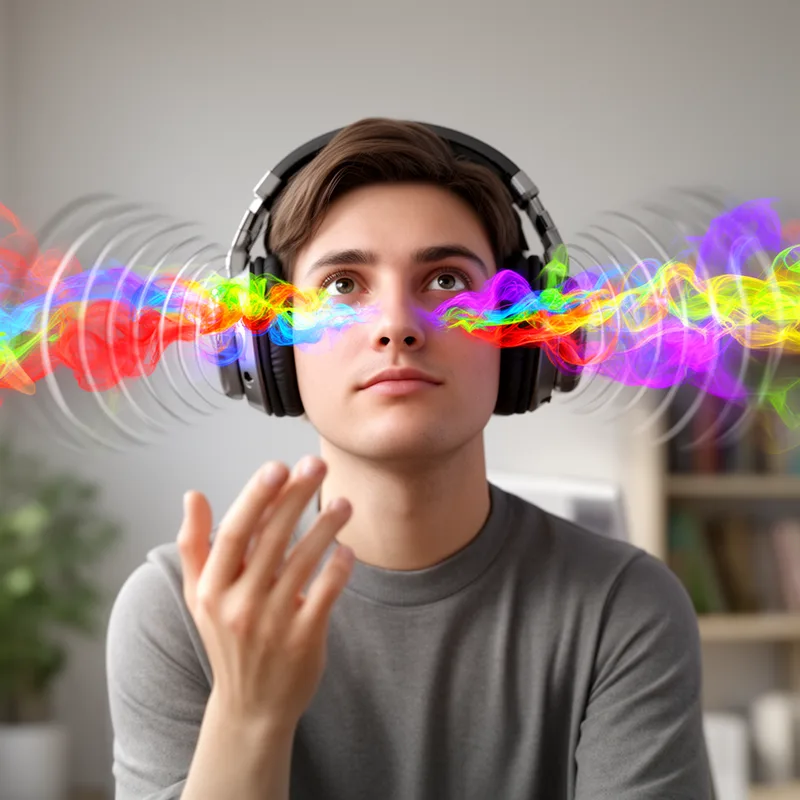
chromesthesia
- noun
- /ˌkroʊməˈθiːziə/
- Specialized
- For some people with chromesthesia, every musical note appears as a different color.
Examples
-
Many musicians with chromesthesia describe seeing vibrant colors while they play their instruments.
-
She experiences chromesthesia whenever she hears music.
-
Scientists have developed tests to measure the consistency of color associations in chromesthesia.
-
The artist described how her chromesthesia influences her choice of colors when painting.
-
Do you think chromesthesia is a common phenomenon?
-
Individuals with chromesthesia may perceive a specific shade of blue when they hear a certain sound.
-
Her chromesthesia makes concerts a unique experience, as she visualizes colors that accompany different melodies.
Synonyms

 4
9.9
4
9.9

A condition where one sense makes you feel another, for example seeing colors when hearing music

A condition in which sounds make someone see colors

An experience of seeing colors when you hear sounds, especially music
Surface Forms
Morphology
Etymology
The word chromesthesia comes from the Greek parts chroma 'color' and aisthesis 'feeling'. It literally means 'feeling color', which helps explain when sounds or other things make a person see or sense colors.