
chorion
- noun
- /ˈkɔːriən/
- Specialized
- Indeed, since the eggs' hairs are uniformly distributed on the chorion, the difference between the mask area and the area of its minimum enclosing disk is higher for hatched alevins than for eggs.
- impurities and chorions
Examples
-
During pregnancy, the chorion plays a crucial role in providing nutrients to the fetus.
-
Scientists study the chorion to understand the development of embryos in various species.
-
Eggs also possess hairs on their chorion that may reduce the circular aspect of their associated mask.
Academic text (2016) -
In contrast, chorion provokes neovascularization and typical rejection phenomenon 5.
Academic text (2007) -
These components may be embryos, empty chorions, or some type of impurity.
Academic text (2016) -
The medium may still contain impurities or the chorion if the egg hatched during incubation.
Academic text (2016) -
Furthermore, the zygote-formed embryos are enveloped by the yolk sac (this part does not develop in the human fetus), amnion, allantois, and chorion.
Blog text (6) -
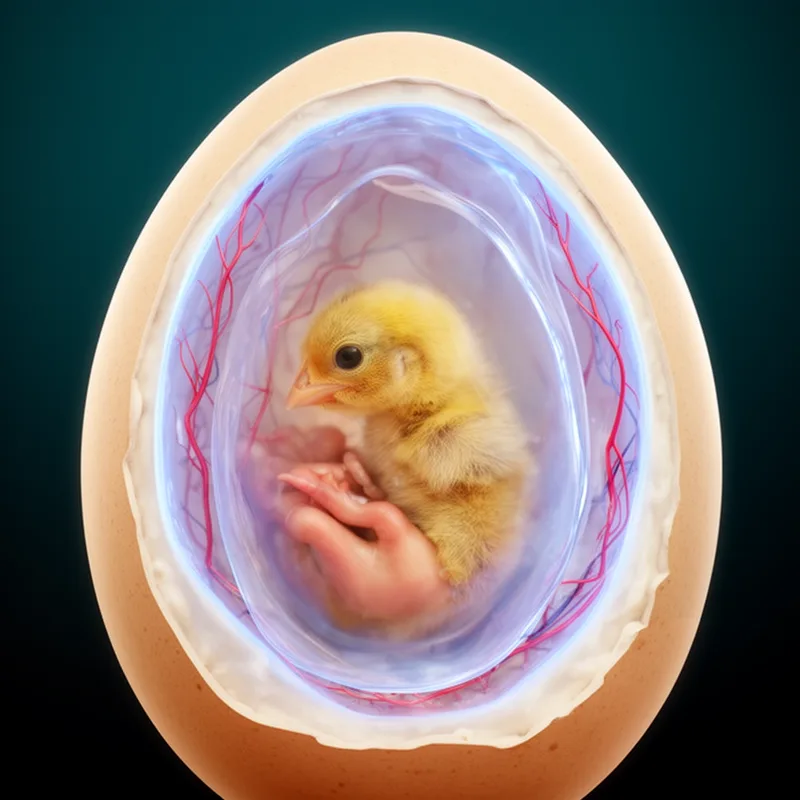
The chorion forms a protective layer around the developing embryo in bird eggs.
Surface Forms
Etymology
Chorion comes from an old Greek word chórion that means 'skin' or 'membrane'. That's why chorion is the thin outer membrane that surrounds and protects an embryo.

