
chorioallantoic
- adjective
- /ˌkɔːri.oʊ.əˈlæn.tɔɪk/
- Specialized
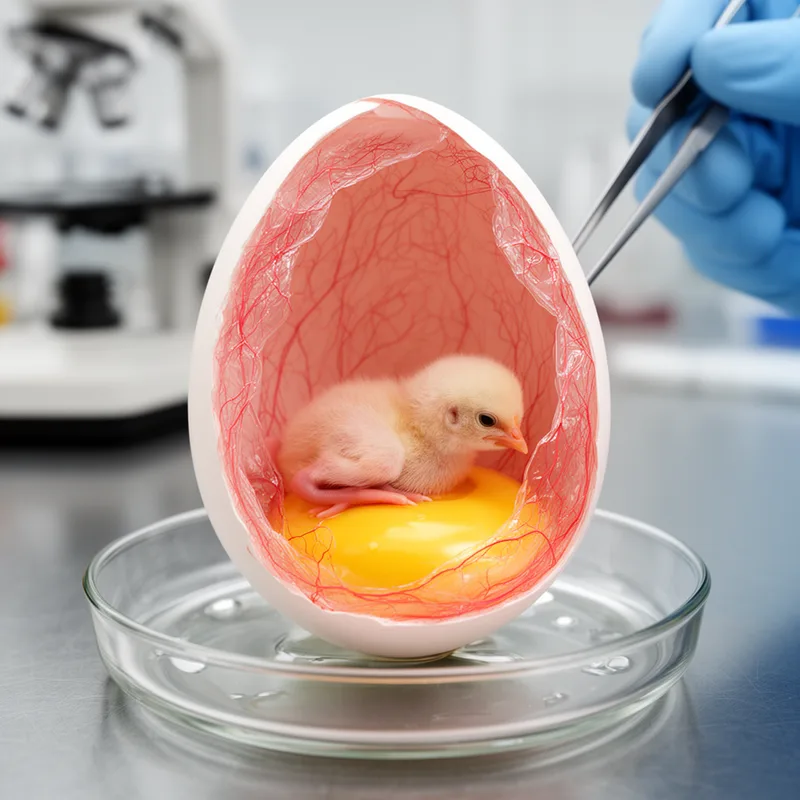
- The chorioallantoic membrane facilitates gas exchange during the early development of bird embryos.
- chorioallantoic membrane
- chorioallantoic placentation
Examples
-
In reptiles, the chorioallantoic membrane is crucial for the embryo's respiratory functions.
-
The function of such simple chorioallantoic placentae is thought to be restricted to water and gas exchange, with no nutrient transfer involved (Jones and Baxter 1991, Yaron 1985).
Academic text (1993) -
So in these species, as in mammals, all nutrients needed for embryonic development and growth are transported by the chorioallantoic placenta.
Academic text (1993) -
The chorioallantoic membranes (CAM) assay.
Academic text (2014) -
In the extreme, some of the New World species of the lizard genus Mabuya, the uterus and chorioallantoic membrane form extensive interlocking projections.
Academic text (1993) -
Researchers study the chorioallantoic structure to understand nutrient transport in developing reptiles.
Compounds

- Specialized
A thin membrane with many blood vessels in bird and reptile eggs that helps the embryo breathe and grow
Surface Forms
Morphology
Etymology
Chorioallantoic comes from two Greek parts: chorion, meaning 'outer membrane', and allantois, meaning 'sausage-like sac' because of its shape. So chorioallantoic describes the joined outer membrane and pouch in an embryo, which is why scientists use it for the combined chorion and allantois.

