
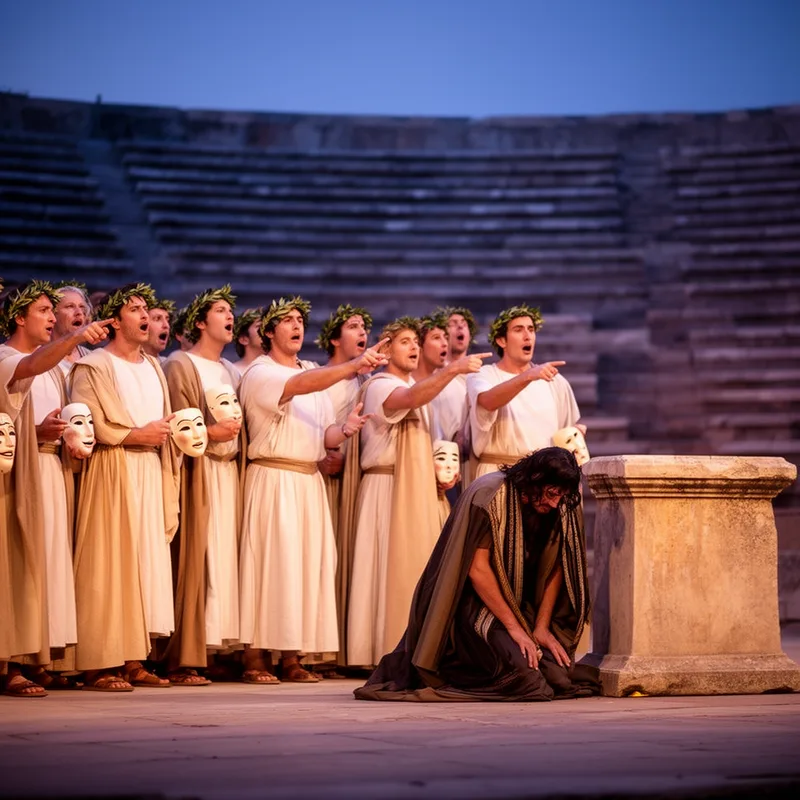
choral ode
- noun
- /ˈkɔrəl oʊd/
- Literature
- Scholars have studied the structure and themes of the choral ode in ancient Greek tragedies.
Examples
-
The choral ode echoed through the theater.
-
The choral ode provided emotional commentary on the events unfolding in the play.
-
During the performance, the choral ode captured the collective response of the citizens to the hero's fate.
-
In many plays, the choral ode provides insight into the characters' emotions.
-
In the play, the choral ode reflects the tragic fate of the main character, enhancing the emotional impact.
-
The director chose a haunting melody for the choral ode to underscore the themes of loss and despair.
-
During the performance, the actors paused for a choral ode that provided insight into the moral dilemmas faced by the protagonists.
Surface Forms
Morphology
The meaning 'an ode sung by a chorus' follows directly from combining 'choral' (sung by a choir/chorus) with 'ode' (a lyrical poem), so a learner who knows both constituents can infer the phrase. Though somewhat domain-specific (classical drama), the composition is regular and parallels similar constructions in other languages, making it readily comprehensible to a B1 learner.
Etymology
The phrase choral ode comes from old Greek plays where a group of singers, the chorus, sang an ode, a short song that reacted to the story. So a choral ode means a song by the chorus that 'comments on' or reacts to the action of the play.

