
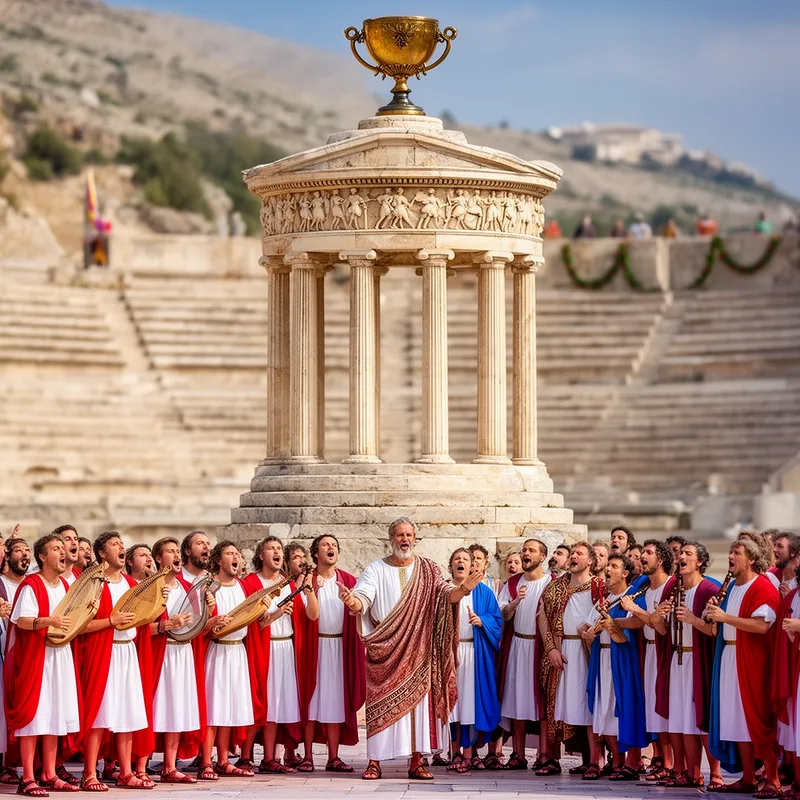
choragic
- adjective
- /kəˈrædʒɪk/
- Formal
- Scholars studied the choragic inscriptions to learn more about ancient Greek festivals.
Examples
-
The choragic monument stood at the end of the street, its columns finely decorated.
-
The choragic monuments of Athens are impressive.
-
The choragic function was vital in supporting public performances in Athens.
-
Many choragic structures were built during ancient times.
-
The choragic monument in Athens showcases the artistry of ancient Greek architecture.
-
At the festival, the choragic contributions were celebrated for their cultural significance.
-
Visitors admired the choragic theater, which hosted performances in honor of Dionysus.
Surface Forms
Morphology
Etymology
The word choragic comes from the Greek chorēgós, made of chorus ('a group who sing or dance') and the part agō ('to lead'). In ancient Greece a chorēgós was a wealthy sponsor who paid for and led a chorus, so choragic describes things connected to those sponsors, their monuments, and festival support.

