
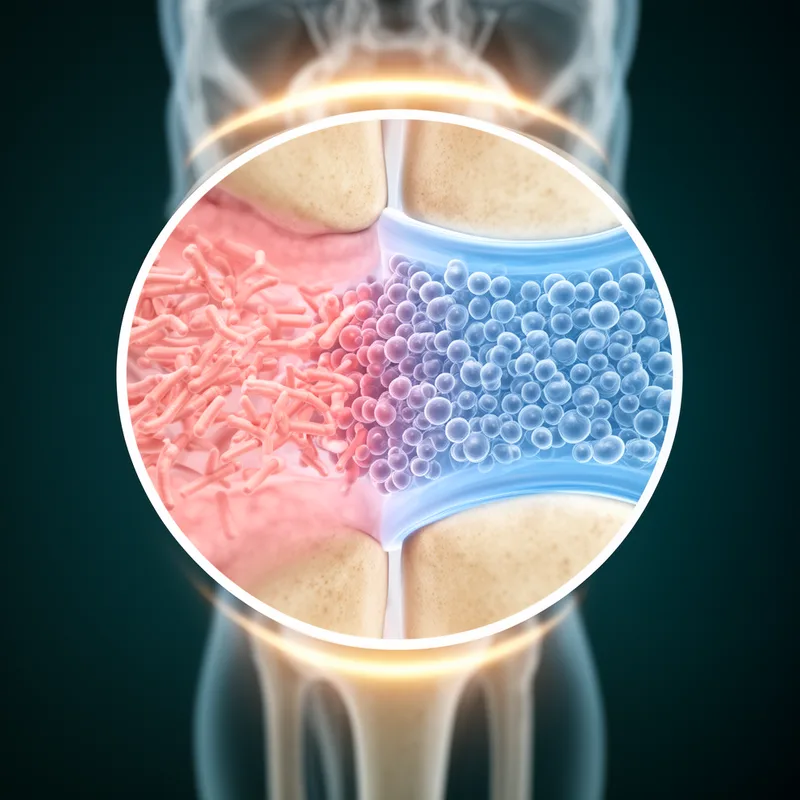
chondrogenesis


 1
9.9
- noun
- /ˌkɒndrəˈdʒɛnɪsɪs/
- Specialized
- Chondrogenesis is essential for the formation of cartilage in joints.
Examples
-
The mechanism of chondrogenesis in heart valves is still controversial.
Academic text (2007) -
Findings in this study indicated that a cascade of events stimulated by the PEMFs caused growth factor synthesis and release, suggesting a benefit to chondrogenesis and endochondral ossification.
Academic text (2003) -
We believe that the theory of chondrogenesis in this patient is due to the typical "wear and tear."
Academic text (2007) -
Unlike the previously reported cases, we believe that this patient's chondrogenesis in the aortic valve is due to the typical "wear and tear" phenomenon.
Academic text (2007) -
Keywords: aortic valve; chondrogenesis; cartilaginous metaplasia
Academic text (2007) -
After cultivation for 24 hours and washed with PBS twice, the medium was replaced by Adipogenesis, Osteogenesis, or Chondrogenesis Differentiation Medium, respectively.
Academic text (2018) -
PLGA nanoparticles were used to mediate SOX9 gene delivery in hMSCs and induce chondrogenesis 148.
Academic text (2018) -
The research studied how chondrogenesis occurs during the development of a fetus.
-
Understanding chondrogenesis can help scientists develop treatments for cartilage injuries.
Surface Forms
Morphology
Etymology
Chondrogenesis breaks into chondro- meaning 'cartilage' and -genesis meaning 'creation', the same root you see in generate and genesis. So chondrogenesis is the process of 'creating cartilage' in the body.