
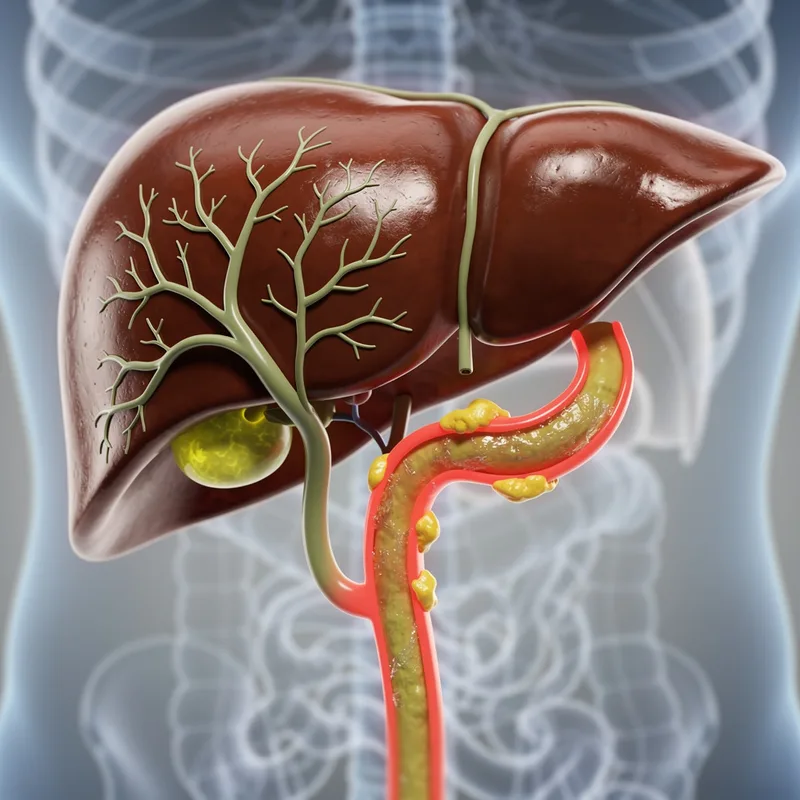
cholangitis
 2
9.9

- noun
- /koʊˌlænˈdʒaɪtɪs/
- Specialized
- The incidence of mild cholangitis, diagnosed if the temperature rose above 38 Celsius during 24-48 hours with no other obvious cause, was similar in the two groups (metal stent 6 patients, polyethylene stent 5 patients).
- patients with cholangitis
- cholangitis, jaundice
Examples
-
In elderly and high-risk patients, it may represent an important alternative to bile duct clearance, particularly in gallstone cholangitis or pancreatitis.
Academic text (2000) -
A limited sphincterotomy was done before stent insertion to reduce the risk of cholangitis noted in earlier work.
Academic text (2000) -
Because of the risk of subsequent cholangitis, its use as a definitive treatment should be confined to highly selected cases.
Academic text (2000) -
Again, cholangitis was more frequent in those with a gallbladder (four) than in those without (two).
Academic text (2000) -
The second or biliary stage usually presents with intermittent right upper quadrant pain with or without cholangitis or cholestasis.
Academic text (2007) -
The median time to onset of cholangitis seems to be around 16 weeks, and patients with a gallbladder in situ seem at greater risk than those without.
Academic text (2000) -
When patients presented with cholangitis, jaundice, or a flu-like syndrome and cholestasis, ERCP was done to confirm obstruction of the endoprosthesis.
Academic text (1992) -
Of those patients who developed cholangitis after having had their common bile duct cleared of stones, all had a gallbladder in situ as well as a previous standard sphincterotomy.
Academic text (2000) -
In the under-60 age group, the mortality rate for common bile duct exploration is only 2% or less, but after 60 years of age, it increases sharply, particularly when infectious complications such as suppurative cholangitis are present or when emergency procedures are required.
Academic text (2000) -
Patients suffering from cholangitis often experience symptoms like fever and abdominal pain.
Surface Forms
Morphology
cholangitis = cholang + itis
A specialized medical formation from the combining form 'cholang-' (relating to bile ducts) plus the medical suffix '-itis' (inflammation); the term is technical and not transparently interpretable by an average B1 learner from common English vocabulary.
Etymology
Cholangitis comes from Greek parts chole meaning 'bile', angio meaning 'vessel' or 'duct', and -itis meaning 'inflammation', and you can see chole in the word cholesterol. So, cholangitis literally means 'inflammation of the bile ducts', which is why it describes an infection or blockage in those ducts.