
chlorinated lime
- noun
- /ˈklɔːrəˌneɪtɪd laɪm/
- Archaic
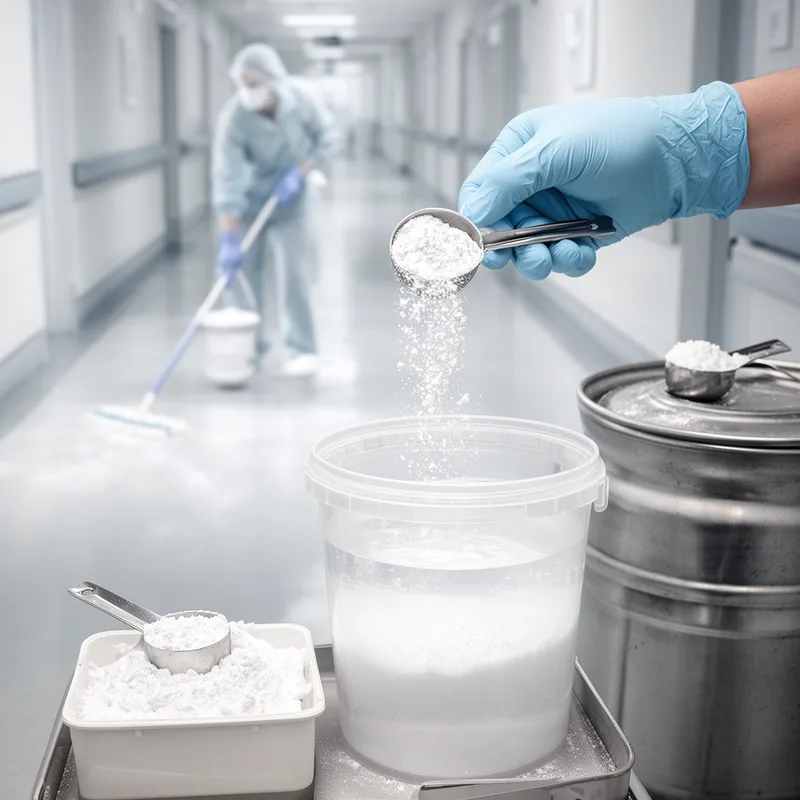
- The hospital floors were scrubbed with chlorinated lime to prevent the spread of infection.
Examples
-
Workers added chlorinated lime to the water tanks to purify them.
-
You should wear gloves when handling chlorinated lime.
-
After the outbreak, the authorities distributed chlorinated lime for communal use.
-
The factory uses chlorinated lime for disinfection.
-
To ensure cleanliness, they used chlorinated lime in the treatment of the public swimming pool.
-
The workers were instructed to prepare a mixture of water and chlorinated lime for disinfection.
-
After heavy rainfall, the village distributed chlorinated lime to help clean the contaminated water sources.
Synonyms


 1
4.9
1
4.9
A white chemical used to clean and kill germs in water, for example in pools

A white powder used to bleach and kill germs
A white powder used to bleach clothes and to kill germs
Surface Forms
Morphology
The phrase is directly compositional: 'chlorinated' means treated with or containing chlorine and 'lime' refers to the calcium-based material, so a learner knowing both words can infer it is lime that has been combined/treated with chlorine and used for bleaching/disinfection. While the precise chemical formulation (hypochlorite, hydroxide) is technical, the general substance and function are predictable from the constituents.
Etymology
Chlorinated lime is a name that shows what it is: powdered lime that has been chlorinated, meaning it was exposed to chlorine so it kills germs and bleaches stains. So people used this powder as a 'disinfectant' and for 'bleaching', and the name came to mean that product.