
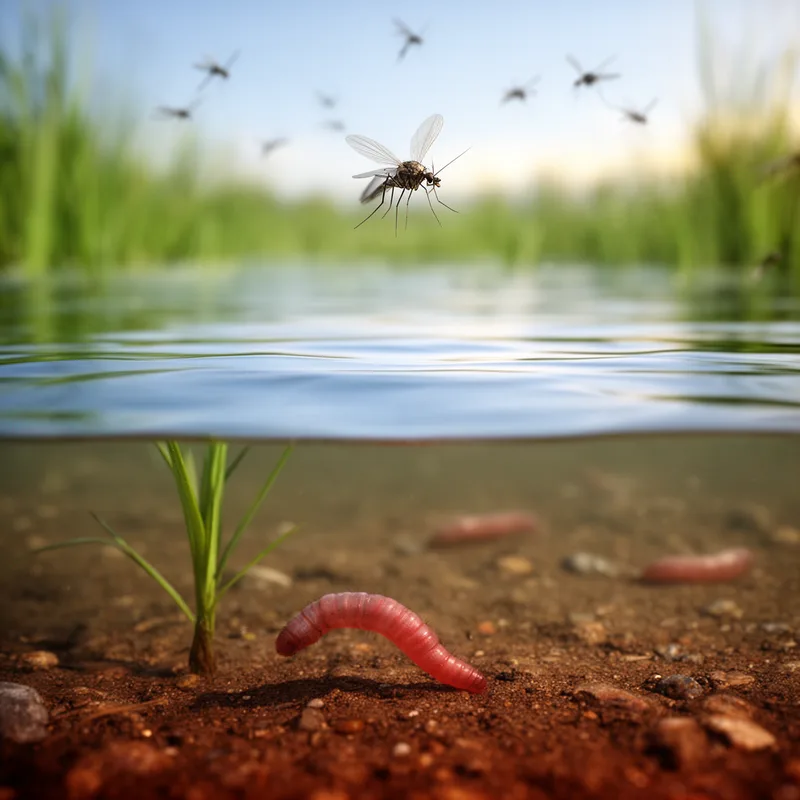
chironomid


 1
9.9
- noun
- /ˈkaɪrəˌnɒmɪd/
- Specialized
- Before the introduction of sculpin, Lake E-1 had high densities of chironomids, with 5.5% of the individual chironomids belonging to predatory species.
- chironomid density
Examples
-
Five years after sculpin introduction, during which time sculpin reproduced to fully colonize the lake, chironomid density was reduced by a factor of 20, and predatory chironomids were not detected (Table 1).
Academic text (1999) -
Five years after sculpin introduction, during which time sculpin reproduced to fully colonize the lake, chironomid density was reduced by a factor of 20, and predatory chironomids were not detected (Table 1).
Academic text (1999) -
Before the introduction of sculpin, Lake E-1 had high densities of chironomids, with 5.5% of the individual chironomids belonging to predatory species.
Academic text (1999) -
For example, the chironomid Polypedilum fallax, a xylophagous (wood-eating) species associated with dead wood, is absent in streams younger than 100 years in age (Milner and Phillips 2005).
Academic text (2007) -
In the pond, numerous chironomids were spotted, indicating a healthy ecosystem.
-
The larvae of chironomids play a vital role in the diet of many fish species.
-
Researchers observed that the chironomids thrived in nutrient-rich waters.
Synonyms
 3
6.1
A very small flying insect often found near water that sometimes bites
 1
9.9
A small non-biting fly often found near water
Surface Forms
Morphology
chironomid = Chironomidae + Chironomus (opaque) = chironom + id
The form is a specialized taxonomic formation (root 'chironom' plus '-id') and is not interpretable by average learners from its parts.
Etymology
Chironomid comes from the scientific name Chironomus, which comes from Greek parts cheir- 'hand' and -nomos 'arrange', and a helpful way to remember this is to imagine the little fly moving its front legs like tiny hands. So, chironomid today means a small non-biting midge, a kind of fly, that lives near water.