
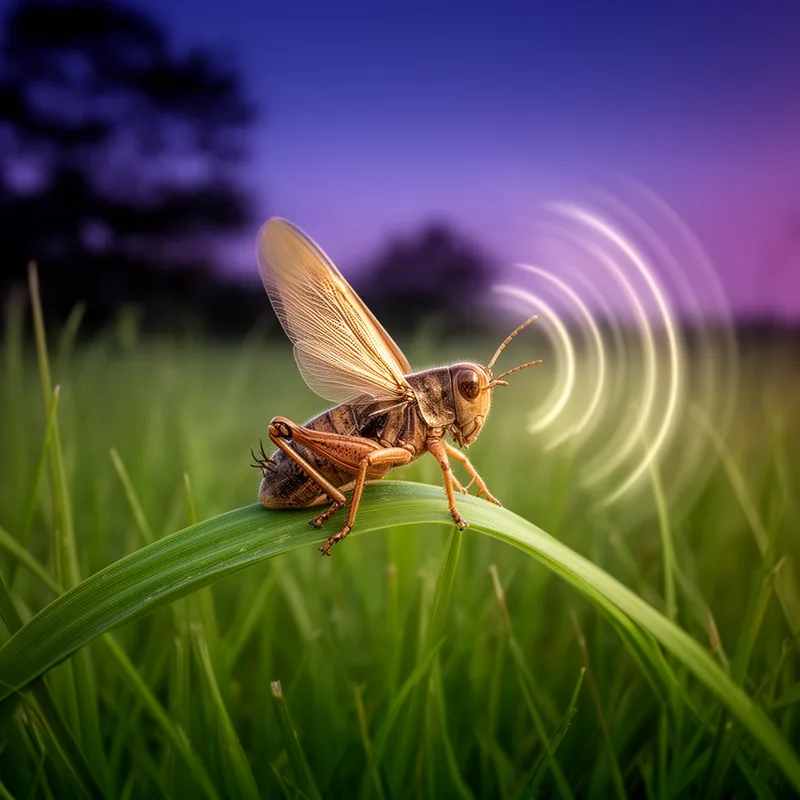
to chir


 1
9.3
- verb
- /tʃɪr/
- Why do the crickets chir at night?
Examples
-
As dusk fell, cicadas chirred in the trees, filling the air with their song.
-
The birds chir happily in the morning.
-
The crickets chirred loudly in the summer night.
-
A grasshopper chirred softly from the tall grass near the fence.
-
The crickets chirred loudly in the summer night.
-
As dusk fell, cicadas chirred in the trees, filling the air with their song.
-
A grasshopper chirred softly from the tall grass near the fence.
Synonyms
 48
1.0
To make a short, high sound like a small bird, insect, or electronic device
 5
8.0
To make short high noises like a small bird's call
 5
2.7
To make a short, high sound like a small bird
 3
4.4
To make a series of short, high bird sounds
 1
3.9
To make a short, high sound like a baby bird
 1
9.9
To make a long high buzzing sound like a grasshopper or cicada
 1
9.9
Make a low, vibrating sound that repeats, like a bird or insect
Antonyms


How Musical

Surface Forms
Etymology
Chir comes from the actual sound animals make and is formed to copy a short, high trilling noise, just like the familiar word chirp. That's why chir means 'to make a trilling or vibrating sound', especially for small birds and insects.