
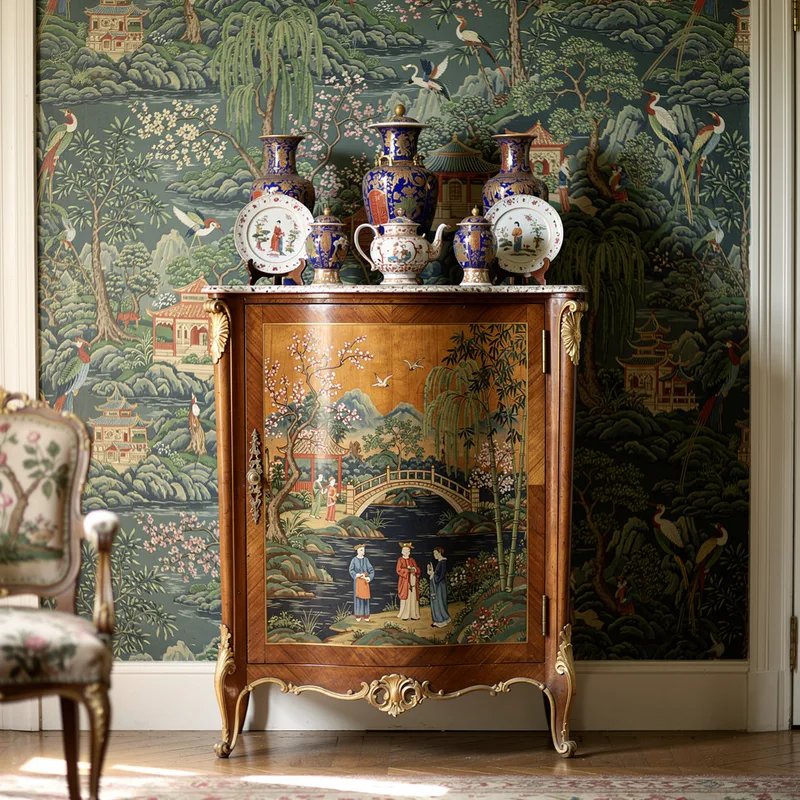
chinoiserie
 1
9.9
1
9.9

- noun
- /ʃɪˈnɔɪzəri/
- Specialized
- Chinoiserie was already assimilated into stagings of Englishness since the seventeenth century, but signaled a specific sense of imperial mobility for European residents in East Africa since it intersected European, East African, and South Asian cultural worlds.
- chinoiserie decoration
- chinoiserie style
- chinoiserie wallpaper
Examples
-
Paired with some orange chinoiserie on the walls, we're aiming for a little something like this...
Blog text (1) -
Miss Draycott collected chinoiserie.
-
Imported objects, such as chinoiserie porcelain, English clocks, French mirrors, and Islamic mass-produced chromolithographs, were central to coastal architectural design programs.
Academic text (2009) -
A modern Chinoiserie breakfront, a Dunbar, Japanese-influenced sofa, silk Dupioni drapes, Murano vases, and a classic Drexel end table.
-
The walls of the salon were covered with ceramic panels ornamented with painted and relief chinoiserie decoration.
-
Ornate brass lamps sat against the red chinoiserie wallpaper.
-
The canopy bed, made in France in the chinoiserie style, is walnut with mother-of-pearl inlay and tasseled silk hangings from Scalamandr.
Surface Forms
Etymology
The word chinoiserie comes from the French chinois meaning 'Chinese' and the ending -erie meaning 'a type of thing or style'. So chinoiserie simply means 'Chinese style' and is used for European art and decoration that copies Chinese designs.