
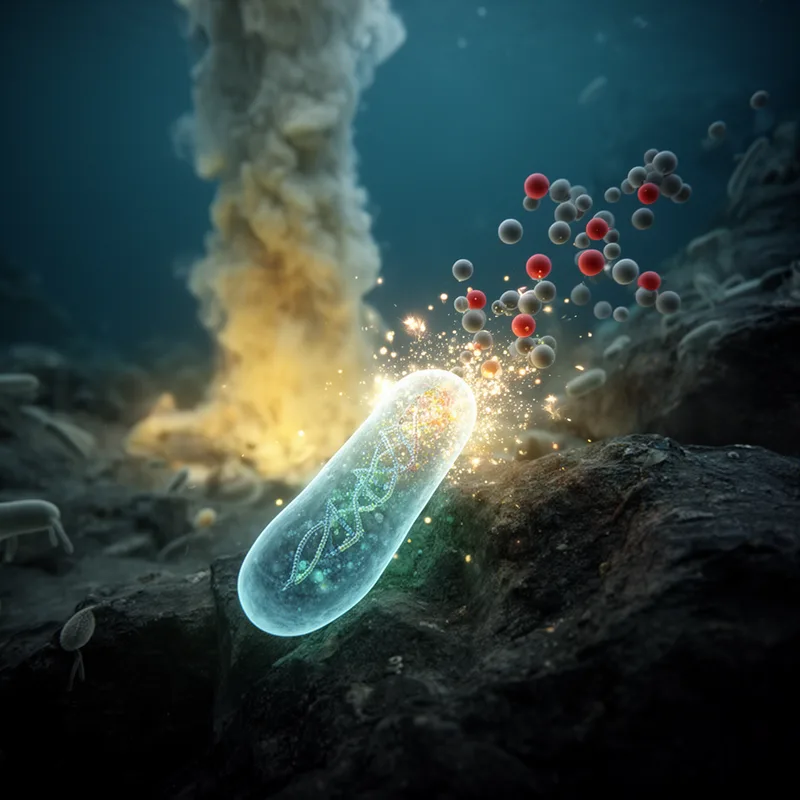
chemotrophic autotroph
- noun
- /ˌkiːmoʊˈtrɒfɪk ˈɔːtəˌtrɒf/
- Specialized
- Some bacteria are classified as chemotrophic autotrophs because they utilize inorganic chemicals for energy.
Examples
-
Unlike plants, chemotrophic autotrophs do not rely on sunlight for growth.
-
Some chemotrophic autotrophs are found in deep-sea vents.
-
In deep-sea vents, chemotrophic autotrophs form the base of the ecosystem.
-
A chemotrophic autotroph can thrive in extreme environments.
-
In deep-sea vents, chemotrophic autotrophs form the base of the ecosystem.
-
Some bacteria are classified as chemotrophic autotrophs because they utilize inorganic chemicals for energy.
-
Unlike plants, chemotrophic autotrophs do not rely on sunlight for growth.
Synonyms

 2
9.3
2
9.3

A living thing that makes its own food from sunlight or chemicals

 1
7.4
1
7.4
A living thing that makes its own food from sunlight or chemicals, like plants
An organism that makes food from carbon dioxide using energy from chemicals, not sunlight
Surface Forms
Morphology
chemotrophic + autotroph
The phrase is compositionally built: 'chemotrophic' (chemo- = chemical, -trophic = feeding/energy source) modifies 'autotroph' (self-feeding organism), so a learner who knows those constituent morphemes/words can derive that it is an autotroph that gets energy from chemical reactions. Although scientific, the meaning follows clear morphological logic rather than being idiomatic, so it is recoverable from the parts.
Etymology
Chemotrophic autotroph shows the idea inside the name: chemo- means 'chemical' and autotroph means 'self-feeder' who makes its own food. These organisms get energy from chemical reactions rather than sunlight and use 'carbon dioxide' as their main source of carbon, so the name helps you remember they 'feed' on chemicals to make their own food.