
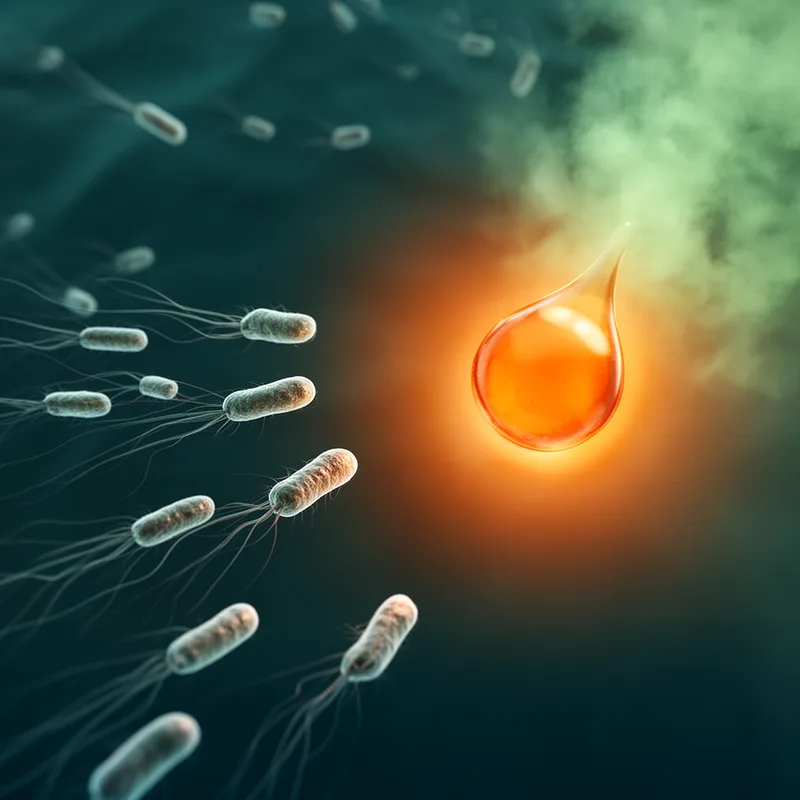
chemotaxis


 1
9.4
1
9.4
- noun
- /ˌkiːmoʊˈtæksɪs/
- Specialized
- The answer is chemotaxis, the process of cells following chemical gradients.
- bacterial chemotaxis
- the process of chemotaxis
- model system for chemotaxis
Loading YouTube…
Watch on YouTubeAcute high blood sugar decreases your neutrophils chemotaxis, phagocytosis and bactericidal capacity.
- Acute high blood sugar decreases your neutrophils chemotaxis, phagocytosis and bactericidal capacity.
Examples
-
The researchers observed chemotaxis in the way the cells migrated toward the glucose concentration.
-
We tested for this possibility by performing a chemotaxis assay on wild-type animals toward or away from ethanol.
Academic text (2017) -
In addition to wound healing, chemotaxis is important to many other biological processes.
Academic text (2012) -
So I'll develop a similar mechanism to chemotaxis, which is movement along a gradient towards a chemical signal.
Blog text (34) -
Dictyostelium has become a favorite model system for chemotaxis among biologists and physicists alike for a number of reasons.
Academic text (2012) -
Patients with active psoriasis vulgaris had a significant increase in neutrophil random migration and directed chemotaxis.
Academic text (2007) -
Chemotaxis, however, is not limited to eukaryotic cells but is also employed by bacterial (prokaryotic) cells.
Academic text (2012) -
Chemotaxis is essential for bacteria to find chemotaxis and escape harmful substances.
-
During chemotaxis, immune cells move toward the site of infection in response to chemical signals.
Synonyms

Movement by a living thing toward something helpful or away from something harmful
Compounds

Surface Forms
Morphology
Etymology
The word chemotaxis comes from chemo- meaning 'chemical' and -taxis meaning 'arrangement' or 'ordered movement', a root you also see in tactic and syntax. So, chemotaxis is when cells or tiny organisms move toward or away from a chemical, guided by that chemical.