
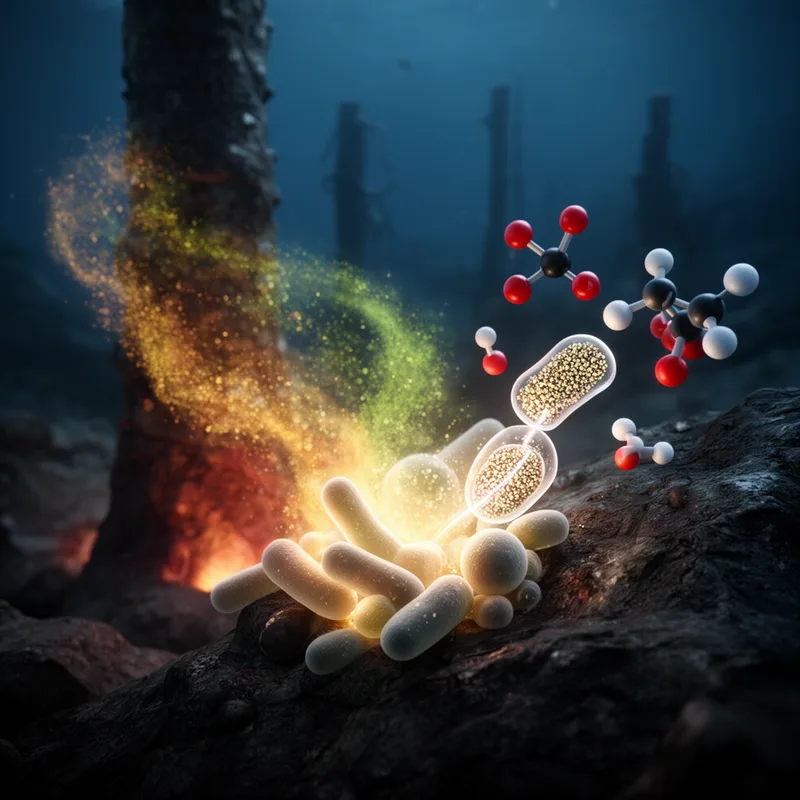
chemosynthesis


 1
9.5
A process in which bacteria make food from carbon dioxide and water using chemical reactions instead of sunlight
- noun
- /ˌkiːmoʊˈsɪnθəsɪs/
- Specialized
:
quimiosíntesis
- The process of chemosynthesis enables specific fungi to convert carbon dioxide and water into useful organic compounds.
- the chemosynthesis process
Examples
-
In deep-sea ecosystems, organisms rely on chemosynthesis to produce food from chemical reactions, rather than photosynthesis.
-
OK, this so-called chemosynthesis basically can use other electron acceptors to drive the energetics of cells.
-
Certain bacteria obtain their energy through chemosynthesis, allowing them to thrive in environments without sunlight.
Surface Forms
chemosynthesis singular
chemosyntheses plural
Morphology
Etymology
Chemosynthesis comes from chemo- meaning 'chemical', the same start as chemistry, and -synthesis meaning 'putting together', like the word synthesize. So chemosynthesis is literally 'putting together' food from chemicals, which explains why some bacteria make organic compounds using chemical energy instead of sunlight.