
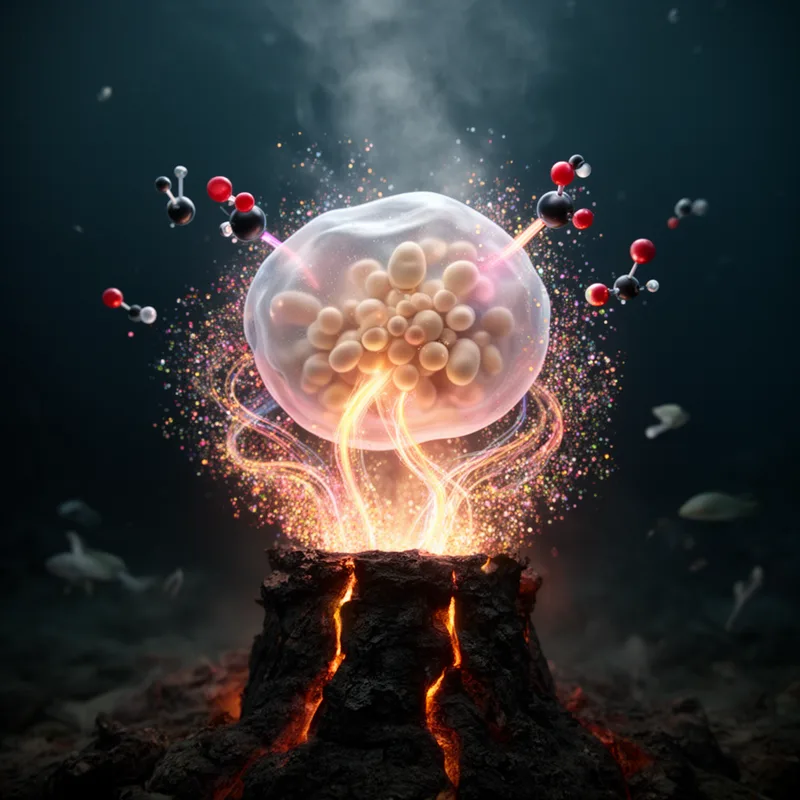
chemoautotroph
- noun
- /ˌkiːmoʊˈɔːtəˌtrɔf/
- Specialized
- Hydrothermal vent communities are often supported by chemoautotroph bacteria.
Examples
-
Some bacteria are chemoautotrophs, using inorganic molecules for energy rather than sunlight.
-
Many chemoautotrophs live near hydrothermal vents, where they oxidize sulfur to obtain energy.
-
Unlike plants, chemoautotrophs do not rely on photosynthesis for growth.
-
A chemoautotroph can thrive in extreme environments.
-
Many chemoautotrophs live near hydrothermal vents.
-
Some bacteria are chemoautotrophs, using inorganic molecules for energy rather than sunlight.
-
Unlike plants, chemoautotrophs obtain their carbon from carbon dioxide and not from organic sources.
Synonyms

A living thing that gets energy from chemical reactions and uses carbon dioxide as its main source of carbon
Surface Forms
Morphology
chemoautotroph = autotroph (semi-transparent) = chemo + auto + troph
The target word is formed by adding chemo- to autotroph, but the specialized scientific meaning is only partly predictable without prior knowledge.
Etymology
Chemoautotroph comes from three parts: chemo- meaning 'chemical', auto- meaning 'self', and -troph meaning 'to feed'. So a chemoautotroph is an organism that 'feeds itself' on chemicals instead of sunlight and uses carbon dioxide as its main carbon source.

