
chalkstone


 1
9.9
1
9.9
- noun
- /ˈtʃɔkˌstoʊn/
- Archaic
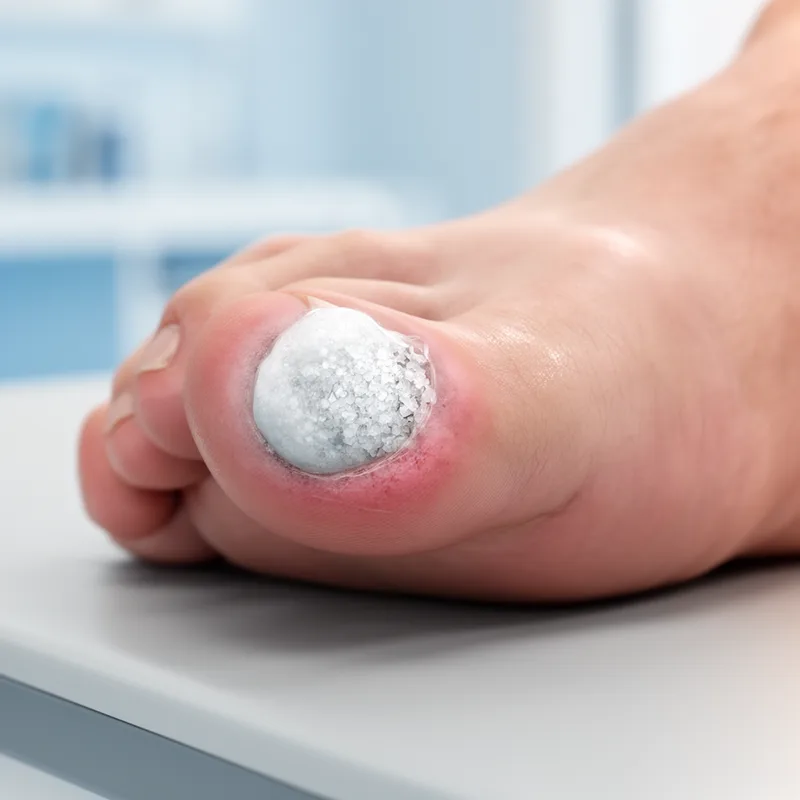
- The doctor identified a chalkstone near the patient's big toe, confirming a case of long-term gout.
Examples
-
Years of untreated gout led to painful chalkstones forming around his finger joints.
-
The doctor diagnosed him with chalkstone deposits in his joints.
-
A large chalkstone had developed on the helix of her ear, causing discomfort.
-
Many patients suffering from gout develop chalkstones over time.
-
The doctor explained that the chalkstone in his toe was a painful symptom of gout.
-
After years of suffering from gout, she discovered two chalkstones in her ear.
-
He learned that the chalkstone he found was actually a deposit of uric acid from his chronic condition.
Synonyms

A hard lump of uric acid crystals near a joint, found in long-term gout
Surface Forms
Morphology
Etymology
The word chalkstone comes from the two simple parts chalk and stone. Chalk is a soft, white rock used for writing and stone means 'rock', so a chalkstone is a hard, pale deposit in the body that looks like a little rock or clump of chalk, which is why doctors use this word for the whitish deposits seen in long-term gout.