
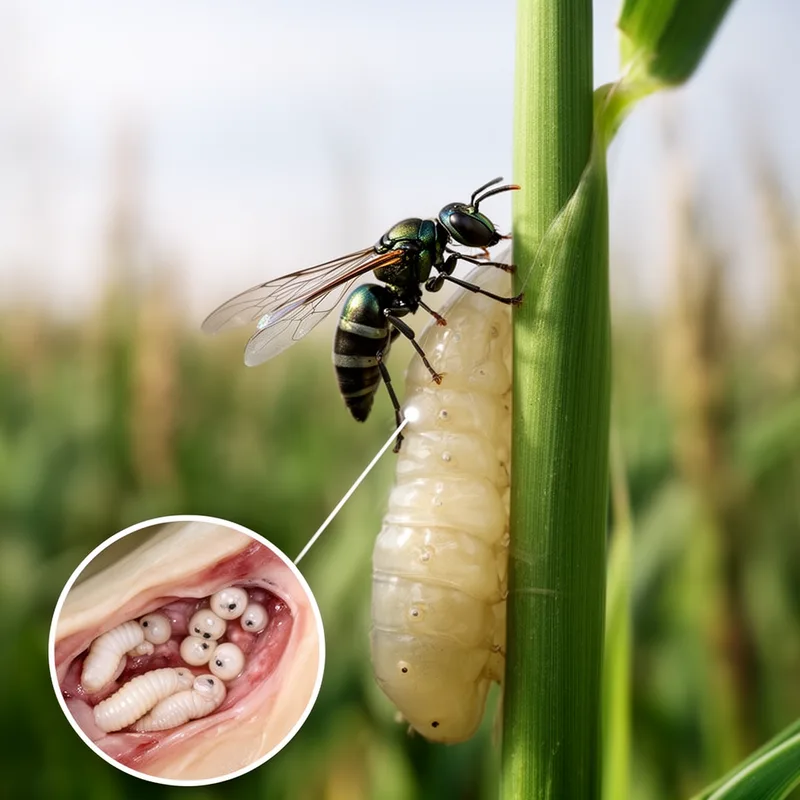
chalcis fly
- noun
- /ˈkæl.sɪs flaɪ/
- Specialized
- Scientists observed a chalcis fly deposit its eggs inside the larvae of another insect.
Examples
-
The chalcis fly is often studied for its role in controlling pest populations naturally.
-
The chalcis fly is often mistaken for a wasp.
-
Farmers appreciate the presence of chalcis flies in their fields due to their parasitic habits.
-
Many chalcis flies are known for their vibrant colors.
-
Farmers appreciate the presence of chalcis flies in their fields because they help control pest populations.
-
Scientists studied how a chalcis fly lays its eggs inside the larvae of other insects.
-
The shiny metallic coloration of the chalcis fly makes it easily recognizable in nature.
Synonyms
A tiny wasp that lays eggs in other insect eggs or young insects and helps control pests
A very small wasp whose young grow inside other insects' eggs or young, helping to control pests
A very small wasp that lays eggs in other insects' eggs or young and helps control pests
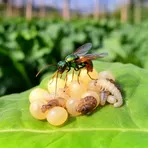
A very small wasp-like insect whose young live inside and eat other insects' eggs or baby insects
Surface Forms
Morphology
The noun-noun compound directly combines a genus name ('Chalcis') with 'fly' (an insect), so a learner who knows both constituents can infer it denotes an insect associated with the genus Chalcis. This follows standard English naming/compositional patterns for animals; only detailed taxonomic nuance would require specialist knowledge, but the basic referent is transparently derivable.
Etymology
Chalcis fly may come from an old Greek word for 'copper', because chalcis refers to copper and many of these small, wasp-like insects have a shiny, copper color. They lay eggs inside other insect larvae so their young eat the host and help farmers by 'controlling pests', which explains why people use the name for this tiny fly whose young live inside other insects.

