
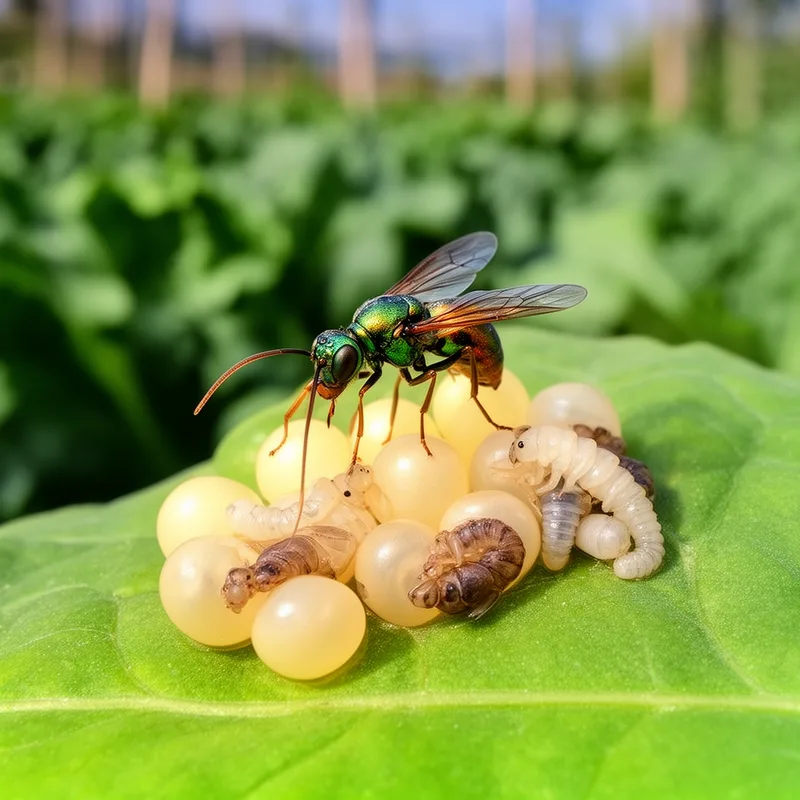
chalcidfly
- noun
- /ˈkæl.sɪdˌflaɪ/
- Specialized
- Scientists observed a chalcidfly depositing its eggs inside the larvae of crop-damaging beetles.
Examples
-
The chalcidfly is often used in agriculture to control populations of harmful pests.
-
Gardeners appreciate the role of the chalcidfly in maintaining the balance of garden ecosystems.
-
The chalcidfly is often used in biological pest control.
-
Many farmers rely on chalcidflies to manage pest populations.
-
Gardeners appreciate the role of the chalcidfly in controlling harmful pests in their gardens.
-
Scientists observed a chalcidfly laying its eggs in the larvae of harmful beetles.
-
The chalcidfly is commonly employed by farmers as a natural method to reduce pest populations.
Synonyms
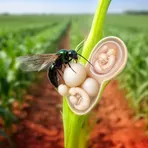
A very small wasp whose young grow inside other insects' eggs or young, helping to control pests
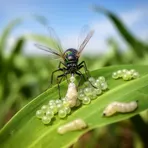
A tiny wasp that lays eggs in other insect eggs or young insects and helps control pests
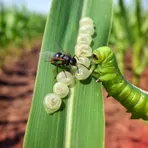
A very small wasp that lays eggs in other insects' eggs or young and helps control pests

A small wasp that lays eggs inside other insects so its young eat them
Surface Forms
Morphology
Etymology
Chalcidfly comes from the old Greek root chalkos, which means 'copper', because many of these tiny wasp-like insects have a shiny, metal colour. They are not true flies but very small wasps that lay their eggs inside other insects, so the name helps you remember a 'small, coppery insect' that gardeners use to control pests.

