
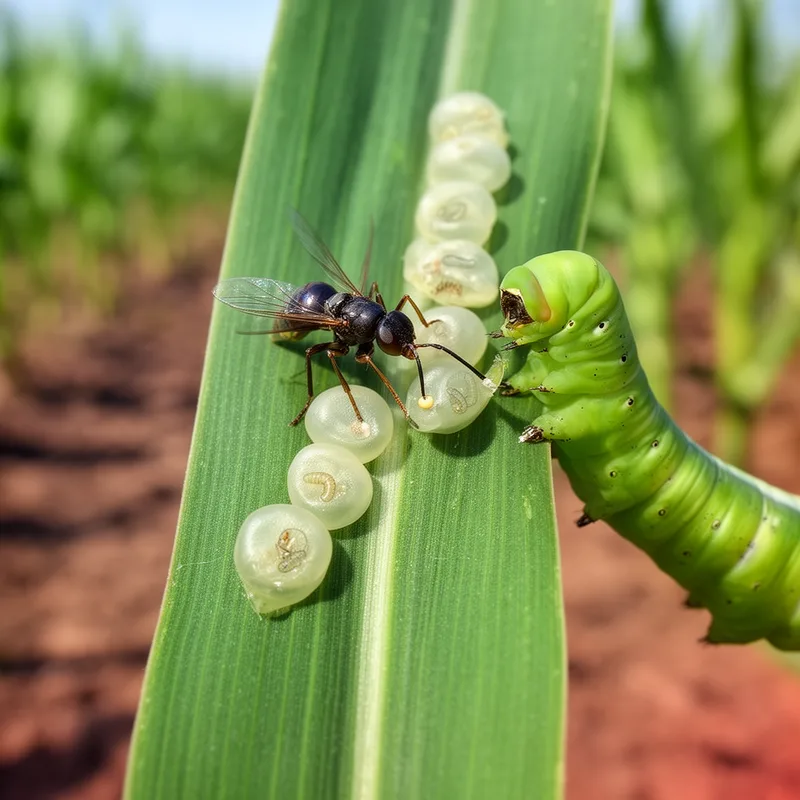
chalcid fly
- noun
- /ˈkæl.sɪd flaɪ/
- Specialized
 :
mosca chalcid
:
mosca chalcid
- The larvae of the chalcid fly develop inside the eggs of other insects.
Examples
-
A farmer introduced chalcid flies to help control the population of destructive crop pests.
-
Entomologists often study chalcid flies for their role in natural pest management.
-
The chalcid fly is known for its parasitic behavior.
-
Many chalcid flies help control pest populations.
-
Farmers often release chalcid flies into their fields to reduce the number of harmful insect pests.
-
Scientists have discovered that chalcid flies can effectively limit the spread of certain crop diseases by targeting pest insects.
-
The larvae of the chalcid fly are actually beneficial, as they feed on the eggs of pests that damage crops.
Synonyms
A very small wasp whose young grow inside other insects' eggs or young, helping to control pests
A tiny wasp that lays eggs in other insect eggs or young insects and helps control pests
A very small wasp-like insect whose young live inside and eat other insects' eggs or baby insects

A small wasp that lays eggs inside other insects so its young eat them
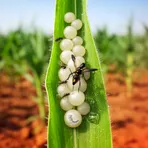
Very small wasps that lay eggs inside pest insects to protect crops
Surface Forms
Morphology
The meaning is directly compositional: 'chalcid' (a wasp-like insect) modifying 'fly' yields a specific kind of small insect, so the overall sense as a particular insect type is derivable from the parts. While 'chalcid' is somewhat technical, assuming the learner knows that constituent, the compound denotes a type of fly and is immediately interpretable.
Etymology
Chalcid fly may come from an old Greek word for 'copper', because many chalcid insects look shiny like metal. These small, wasp-like flies have young that grow inside other insects' eggs, so the name now refers to tiny helpers that 'control pests'.

