
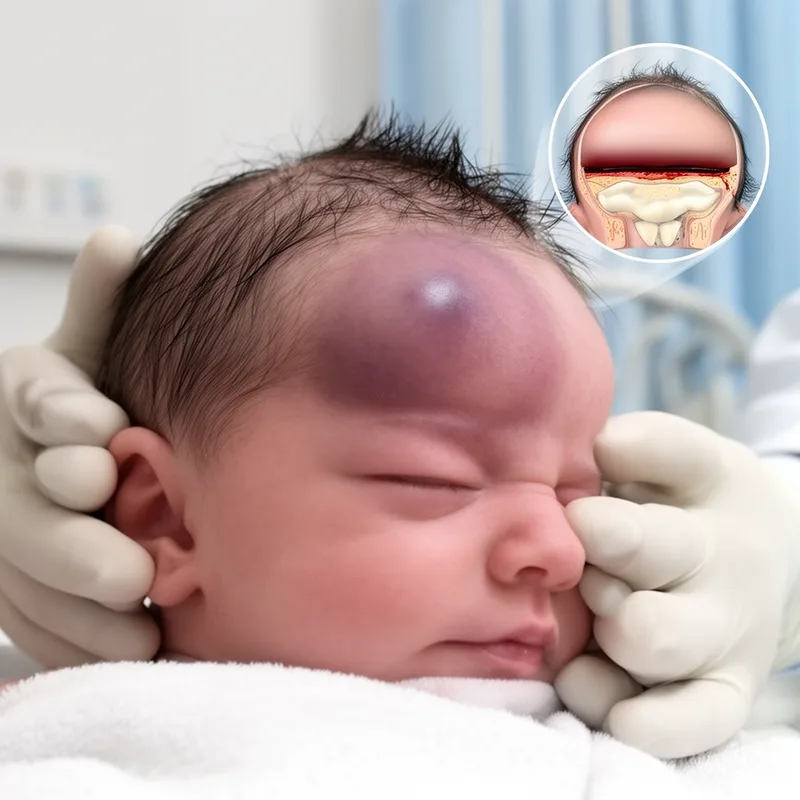
cephalhematoma
- noun
- /ˌsɛfəlhɪˈmoʊtə/
- Specialized
- A cephalhematoma can develop as a result of birth trauma during delivery, leading to a noticeable bump on the infant's scalp.
Examples
-
Most cephalhematomas resolve on their own within a few weeks after birth.
-
The doctor diagnosed the swelling as a cephalhematoma after examining the newborn's head.
-
A large cephalhematoma may be concerning, but it typically does not require surgical intervention.
-
The newborn was diagnosed with a cephalhematoma after delivery.
-
A cephalhematoma can occur due to difficult labor.
-
The doctor diagnosed the swelling on the newborn's head as a cephalhematoma, indicating a blood collection between the scalp and skull.
-
Most cephalhematomas are harmless and resolve naturally within the first few weeks of a baby's life.
Synonyms

 31
7.5
31
7.5

A swelling of blood under the skin after an injury that feels like a lump

A collection of blood under the skin on a newborn's head caused by pressure during birth
Surface Forms
Morphology
Etymology
The word Cephalhematoma breaks into three parts: cephal- 'head', hemat- 'blood', and -oma 'swelling'. So it literally means 'head-blood-swelling', which is why it describes a collection of blood between a newborn's scalp and the skull bone.