
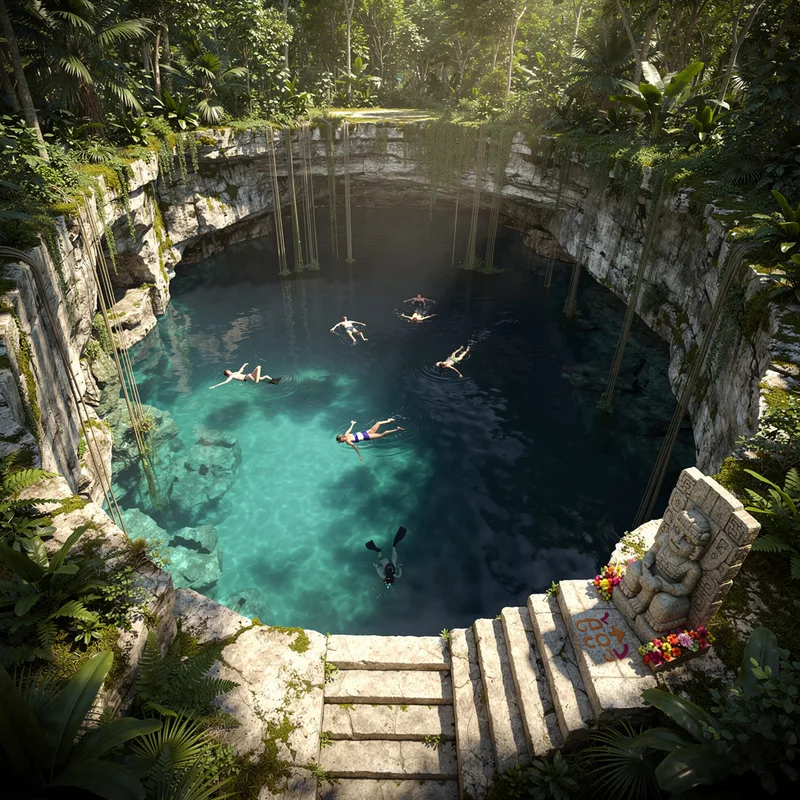
cenote
 2
9.9

- noun
- /səˈnoʊteɪ/
- Specialized
- Great cities like Chichen Itza and Mayapan centered around life-sustaining cenotes, and small villages in the Yucatec hinterland still rely on them.
- cenotes (sinkholes)
- ring of cenotes
- sacred cenote
Examples
-
In this riverless land, the Maya depended on the cenotes as their primary source of water.
Academic text (2004) -
There are lots of caves and cenotes with holes in the limestone.
Fiction book (1999) -
"You have to make sure you allow yourself enough air to get back out of a cenote.
Academic text (2004) -
To the Maya, the Cenote was a passage between worlds, a spirit gate.
Fiction book (2002) -
The tour guide explained that a cenote is a natural sinkhole filled with water, perfect for swimming.
-
During our hike, we discovered a beautiful cenote surrounded by lush vegetation.
-
The ancient Maya built their cities near cenotes, relying on them for fresh water in the arid climate.
Synonyms
 183
3.6
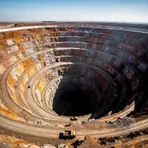
A large hole in the ground used for mining
 17
5.7
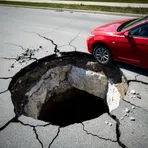
A hole in the ground made when the surface collapses, often in limestone areas
 15
2.4
A low place in the ground where animals drink water
How Big

Surface Forms
Etymology
Cenote comes from a Maya word, ts'ono'ot, which means 'well' or 'water hole'. So think of a deep, clear 'well' in the ground where people drew water and held rituals, and today a cenote is a natural pit or sinkhole often filled with water, found especially in Mexico.