
celestial point
- noun
- /səˈlɛstʃəl pɔɪnt/
- Specialized
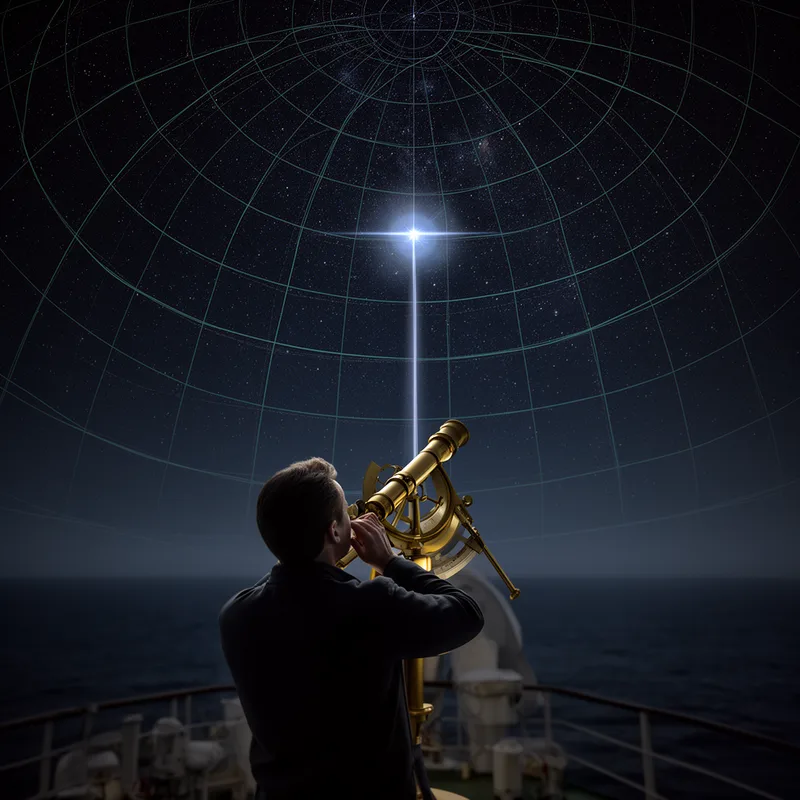
- Navigators once relied on measuring angles between stars and a celestial point to determine their position at sea.
Examples
-
The vernal equinox is a significant celestial point used in astronomy to mark the beginning of spring.
-
The celestial point marked the location of the North Star.
-
Each celestial point is defined by its coordinates on the celestial sphere.
-
Astronomers study various celestial points to navigate the night sky.
-
Astronomers use a specific celestial point to locate distant stars in the night sky.
-
Each celestial point serves as a reference for mapping the positions of planets and constellations.
-
By studying various celestial points, scientists can better understand the structure of the universe.
Surface Forms
Morphology
The meaning is directly compositional: 'celestial' (relating to stars/planets) + 'point' (a position) yields a position on the celestial sphere. This straightforward noun-noun combination follows regular English formation and is cross-linguistically transparent, so a B1 learner who knows the constituents would readily infer the MWE meaning.
Etymology
Celestial point comes from the simple image of a tiny marked dot: point means a small spot and celestial means 'in the sky'. People who watched the stars and sailors used these dots on star maps to find their way, so celestial point now means 'a precise place in the sky used to find position'.

