
caveat emptor
 3
9.7
3
9.7

- noun
- /ˈkæv.i.æt ˈɛmptɔr/
- Formal
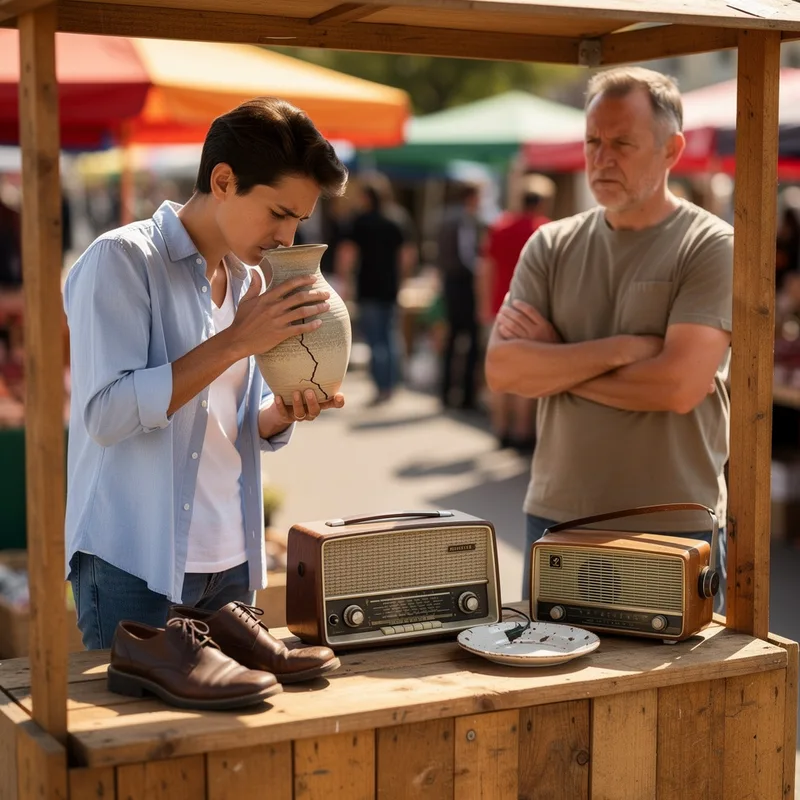
- Before purchasing a vintage car, he was reminded of caveat emptor, meaning he should carefully inspect the vehicle first.
- caveat emptor, let the buyer
Examples
-
A small firm might be able to fall within exceptions that protect small buyers and renters from the doctrine of caveat emptor.
Academic text (1996) -
When shopping for used electronics, it's wise to remember the principle of caveat emptor: let the buyer beware.
-
As consumers in shops and of advertising, we have mostly absorbed, by now, a 'caveat emptor' sensibility.
Blog text (12) -
I agree with your general message of caveat emptor, but caveat emptor only cautions to avoid fraud; it doesn't excuse it.
Blog text (3) -
The Western scourge of caveat emptor, let the buyer beware, has crept into an honor-based system.
Academic text (1994) -
"Caveat emptor" seems to be the controlling ethic of business transactions: a universal suspicion lest one get duped.
Academic text (1997) -
The problem is that, like Vioxx, some of the drugs being advertised are not what they appear, meaning if you see it advertised, the old axiom, caveat emptor? Let the buyer beware? is something to remember.
Blog text (22) -
Under previous landlord-tenant law interpretations, landlords did not have an obligation to fix something that fell into disrepair under the caveat emptor (let the buyer beware) concept.
Academic text (1991) -
In real estate, caveat emptor applies, so buyers must do their due diligence before making an offer.
Synonyms
 1
7.2
1
7.2
A warning that people who buy something should check it carefully because they are responsible for problems
Surface Forms
Morphology
The two constituents literally mean 'warning' (caveat) and 'buyer' (emptor), so the overall sense 'a warning to the buyer' / 'let the buyer beware' is directly inferable from their meanings. Although it is a Latin legalism, the semantic composition is transparent and corresponds closely to the common English paraphrase 'buyer beware', so a learner who knows both constituents can understand it.
Etymology
Caveat emptor comes from old market rules: caveat means 'let him beware' and emptor means 'buyer'. So it means 'let the buyer beware' and reminds us that the buyer must check the goods and is responsible.