
causalgia
- noun
- /kɔːˈzæl.dʒə/
- Specialized
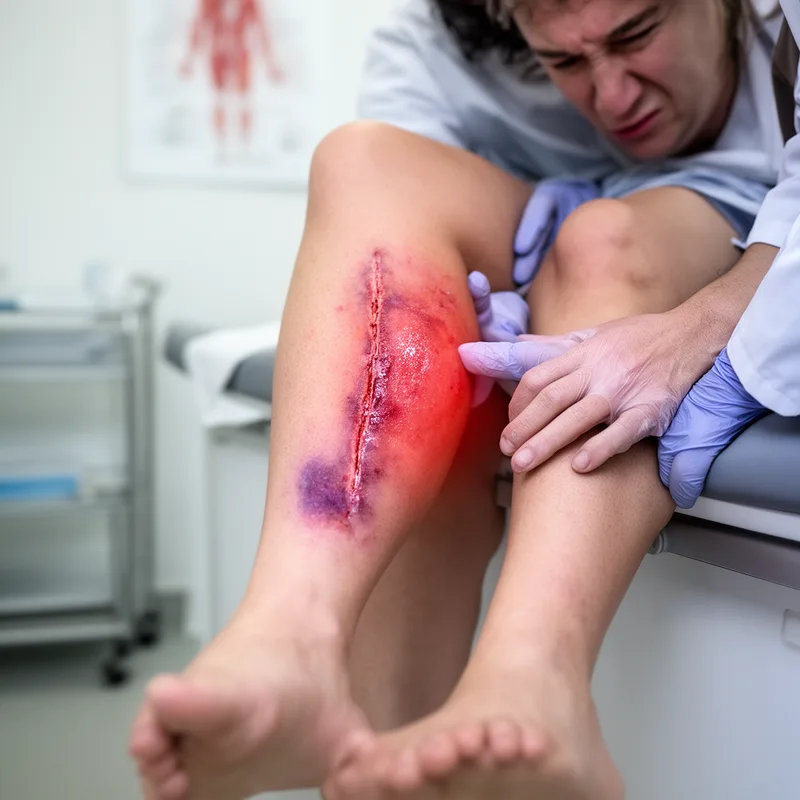
- Following the nerve damage, she experienced causalgia, resulting in persistent and intense burning pain in her leg.
Examples
-
This neuralgia-like pain may be described as sharp, burning (causalgia) or shooting in nature; the person may also have the sensation of having a stone or pebble in the shoe upon walking (Willick & Herring, 1998).
Academic text (2002) -
Extension of the MTP joint aggravates the entrapped nerve, causing paraesthesia and causalgia (burning pain).
Academic text (2002) -
But CRPS pain is on the same level with causalgia.
-
So basically, when you measure pain on a scale from one to ten, the worst is causalgia, which is pain from burning, followed by amputation, then birth pain.
-
They tend to experience severe chills immediately following causalgia, and it worsens the pain.
-
Causalgia, allodynia, dysesthesia, muscular weakness, shudders and straining.
-
After his injury, he was diagnosed with causalgia, which caused him excruciating burning pain in his arm.
-
The patient described the sensation of causalgia as a constant, severe burning that interfered with his daily life.
Synonyms

 23
3.9

A hot, painful feeling on the skin like fire

 1
9.9
An unpleasant feeling like burning, tingling, or pain caused by nerve damage
Antonyms

Surface Forms
Morphology
causalgia = caus + algia
A technical medical formation from the Greek combining form 'caus-' (burn) + '-algia' (pain); the parts are not standalone English words and the meaning is not transparently inferable by an average B1 learner.
Etymology
The word causalgia comes from Greek parts caus- meaning 'burn' and -algia meaning 'pain', and it is like the word caustic which also means 'burning'. So causalgia is easy to remember as 'burning pain', the strong, long burning feeling that can follow nerve injury.