
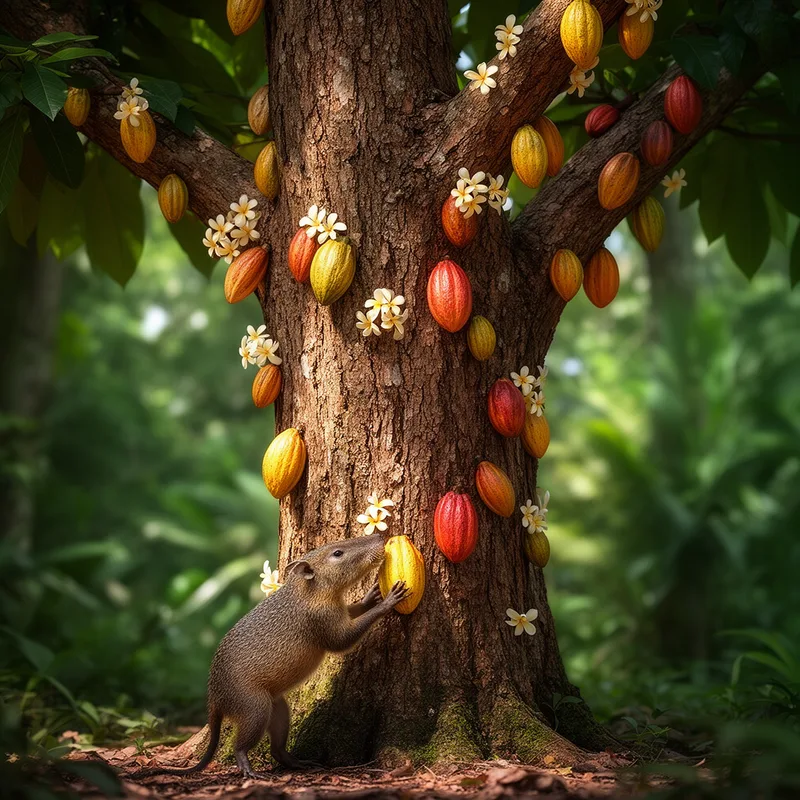
cauliflory


 1
9.9
- noun
- /ˈkɔːlɪˌflɔːri/
- Specialized
- Botanists study cauliflory to understand how certain plants adapt to their environments.
Examples
-
Some tropical trees exhibit cauliflory, making it easier for animals to access their fruit.
-
The cacao tree displays cauliflory, with its fruit growing directly from the trunk.
-
The cauliflory of the jackfruit tree is quite fascinating.
-
Many tropical trees exhibit cauliflory as a unique growth pattern.
-
The mango tree exhibits cauliflory, producing fruits directly from its thick trunk.
-
An example of cauliflory can be seen in the cacao tree, which bears pods on its main branches.
-
Many tropical trees, such as the jackfruit, show cauliflory by flowering and fruiting directly from their trunks.
Surface Forms
Morphology
cauliflory = cauliflorous (opaque) = cauli + flor + y
The term is formed from Latin combining forms ('cauli-' and 'flor-') into a technical adjective and then a noun; these components are not productive standalone English words for B1 learners.
Etymology
Cauliflory comes from the Latin parts cauli- ('stem') and flor- ('flower'), and you can remember 'cauli' from the common word cauliflower. So, cauliflory means flowers and fruit that grow directly from a tree's trunk or main branches.