

caudated
- adjective
- /ˈkɔːdeɪtɪd/
- Specialized
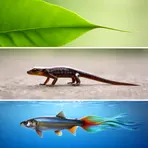
- The lizard's caudated appearance distinguishes it from tailless amphibians.
Examples
-
The caudated lizard quickly darted away.
-
Researchers noted that the embryo exhibited a distinctly caudated shape at this development stage.
-
Many fish are caudated, allowing them to move swiftly through water.
-
Many caudated species thrive in tropical environments.
-
The caudated fish gracefully swam through the coral reef, using its tail to navigate.
-
Some caudated animals, like certain types of lizards, have tails that help them balance.
-
With its long, caudated appendage, the fox could easily maneuver through the thick underbrush.
Synonyms
 1
9.9
1
9.9

Having a tail or tail-like extension

Having a long thin part at the back like an animal's tail

Having the shape of an animal's tail
Antonyms

Surface Forms
Morphology
Etymology
Caudated comes from the Latin cauda, meaning 'tail'. So, something caudated is 'having a tail' or a tail-like part, which is why we use it for animals or embryos with a clear tail.