

cattle breeding
- noun
- /ˈkætəl ˈbridɪŋ/
- Mastery of the modern use of cryopreserved sperm and embryos in cattle breeding was built on three decades of research involving hundreds of animal scientists, thousands of experimental cattle, and millions of dollars of federal, state, and industrial funding.
Examples
-
LANDSAT photographs helped the two archaeologists assess the valley's vegetational composition, which would have had critical implications for the viability of cattle breeding.
Academic text (1998) -
Sustainable cattle breeding methods are essential for ensuring the health of the environment and livestock.
-
This expands cattle breeding opportunities for farmers here and abroad.
Academic text (1996) -
When the Argentine Republic was formed in the 1860s, most of Cuyo was held in large estates devoted to cattle breeding.
Academic text (2000) -
Many farmers invest in cattle breeding to improve the quality of their livestock and increase profit.
-
The seminar provided valuable insights into modern cattle breeding techniques and practices.
Synonyms
 90
3.1
90
3.1

The process of producing new animals or plants by choosing which ones mate
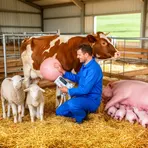
Keeping animals and helping them have babies, like cattle, sheep, or pigs
How Large
2
3.9

- US
16
2.8
- UK
1
2.7
Surface Forms
Morphology
The noun phrase is fully compositional: 'cattle' (livestock) combined with 'breeding' (intentional production of offspring) yields the practice of producing and raising cattle. This compound follows a common, cross-linguistic pattern (X + breeding) and is immediately predictable for learners who know both constituents.
Etymology
Cattle breeding comes from the everyday act of choosing which farm animals should mate. Farmers picked the best cattle, strong cows and bulls, to breed so their calves would give more milk or stay healthy, so cattle breeding means 'careful mating and raising of cattle' to improve the herd.