
catechin


 1
9.9
- noun
- /ˈkætɪkɪn/
- Specialized
- Scientific studies have shown that a cup of green tea offers eight times more catechins than black tea.
- catechins in tea
- catechin polyphenols
- antioxidants called catechins
Loading YouTube…
Watch on YouTubeMatcha is packed with an antioxidant called EGCG, epiglactic catechin, which is great for protecting your body from collagen breakdown, which is great.
- Matcha is packed with an antioxidant called EGCG, epiglactic catechin, which is great for protecting your body from collagen breakdown, which is great.
- Also though, again, just to get into the science, here's catechin or cancer cells.
- Green tea contains a compound called EGCG, which stands for epiglactic catechin and it is a potent polyphenol.
Examples
-
Instant (powdered) tea mixes have little or no catechins.
Academic text (1998) -
Keeping the color green indicates it will have more catechins.
Blog text (15) -
Catechins are the active substances found in the tea leaves.
Blog text (15) -
"There has been only one study that showed that adding milk decreased the bioavailability of catechins in tea," says Blumberg.
Academic text (2003) -
Analyses showed, "there's a huge difference in catechin content among black teas in the bag," says Beecher.
Academic text (1998) -
The catechin polyphenols found in green tea are said to interact with the substance caffeine, which increases thermogenesis.
Blog text (30) -
Beecher and chemist William Bronner measured catechins in different types of tea.
Academic text (1998) -
Green tea contains more simple flavonoids, called catechins, while black tea contains more complex varieties, called thearubigins and theaflavins.
Academic text (2003) -
Green tea contains a compound called EGCG, which stands for epiglactic catechin and it is a potent polyphenol.
-
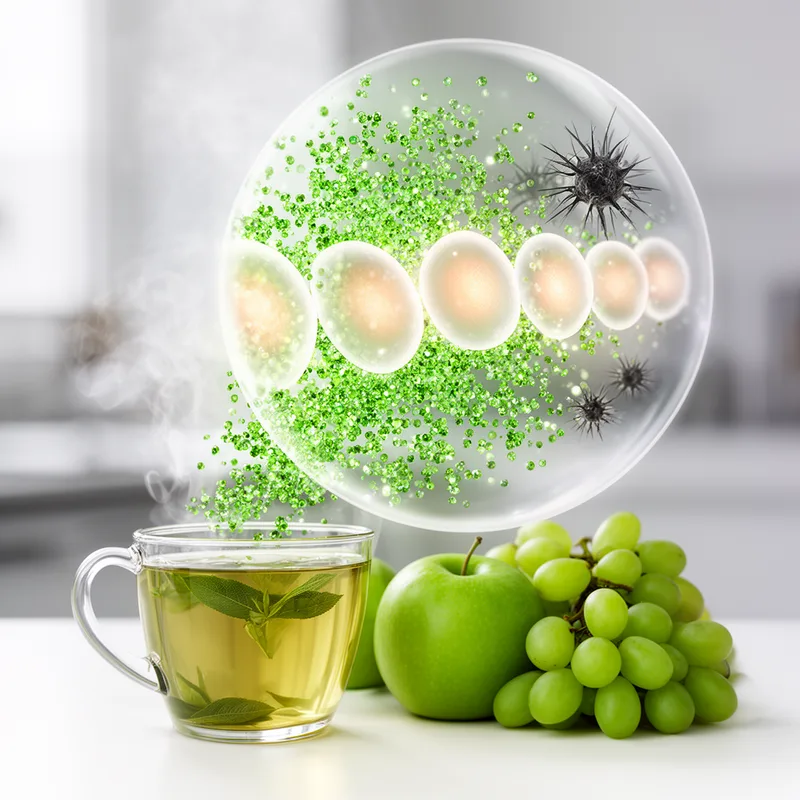
A key compound in green tea known for its health benefits is catechin.
Surface Forms
Morphology
Etymology
Catechin comes from the name catechu, a plant extract used in Asia, plus the chemical ending -in. Because scientists first found this compound in catechu and in tea, the name now means the natural plant chemical found in tea and other plants.