
catalase


 1
7.3
1
7.3
- noun
- /ˈkætəˌleɪs/
- Specialized
 :
catalasa
:
catalasa
- In the laboratory, we used catalase to demonstrate the decomposition of hydrogen peroxide.
- catalase test
- catalase, an enzyme
Examples
-
All sepsis-causing bacteria produce superoxide dismutase (SOD), catalase, and glutathione peroxidases (Table 2) that protect them against oxidative stress caused by reactive oxygen species.
Academic text (2017) -
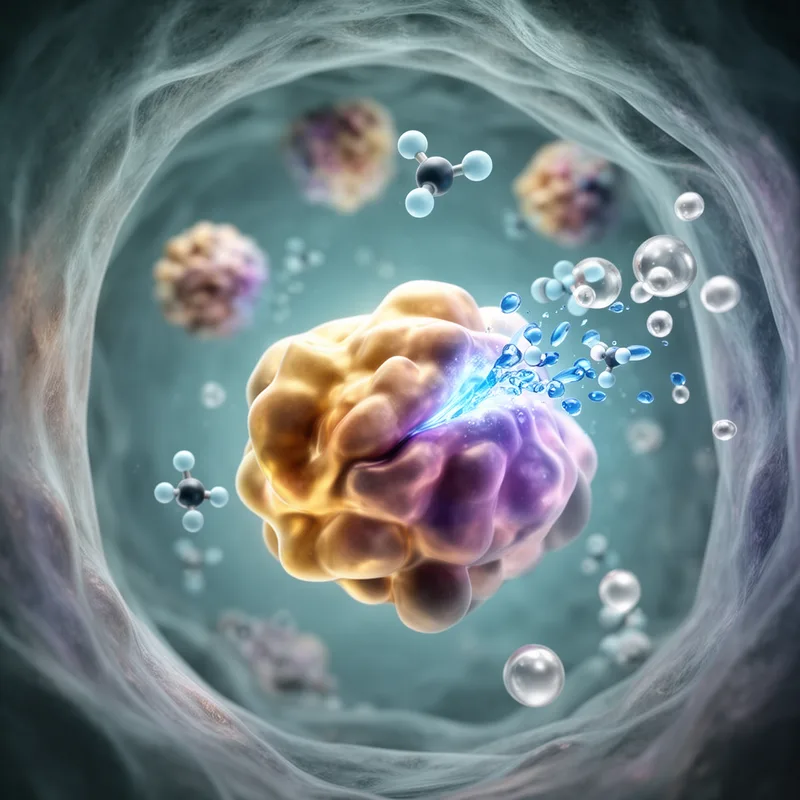
The enzyme catalase breaks down hydrogen peroxide into water and oxygen in living cells.
-
Formation of bubbles indicates a positive catalase test.
Academic text (1993) -
Sodium arsenic, catalase, and H2O2 were purchased from Sigma-Aldrich (St. Louis, MO, USA).
Academic text (2014) -
Bacteria can survive oxidation by having a thick capsule, slime layer, and producing catalase, SOD, and GPX.
Academic text (2017) -
Cells were treated with ROS scavenger catalase (1,500 U) or with H2O2 (50 μM) for 12 hr.
Academic text (2014) -
The mechanism of antioxidants includes the activation of defense enzymes such as glutathione peroxidase, superoxide dismutase, and catalase, which are responsible for ROS scavenging.
Academic text (2008) -
A lack of catalase activity can lead to the accumulation of harmful hydrogen peroxide in cells.
Surface Forms
Morphology
catalase = catalysis (semi-transparent) = catal + ase
The relation to 'catalysis'/'catalyze' and the enzyme-forming suffix '-ase' is recognizable to learners familiar with basic chemistry, but the specific substrate and the truncation process are technical and not obvious to a general B1 learner.
Etymology
Catalase comes from the same root as catalyst, which means 'something that makes a reaction go faster', and the ending -ase, which marks an 'enzyme'. So, catalase is the enzyme that helps break down hydrogen peroxide.