

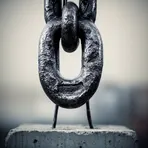
cast-iron
 6
4.8
6
4.8

- adjective
- /ˈkæstˌaɪərn/
- A steam bellows fanned the fire inside, and there was a black cast-iron boiler and a three-headed Swedish Primus stove.
- cast-iron plate
- cast-iron wheel
- heavy cast-iron
Examples
-
Engineers installed a cast-iron suction bracket to provide precise alignment between the pump and motor.
Academic text (2000) -
Speaker, the Prime Minister didn't answer my question about a cast iron guarantee.
-
The new models are constructed with a rugged cast-iron housing for weatherproof, submersible, or buried service applications.
Academic text (2005) -
This cast-iron bridge was built to withstand extreme weather conditions.
-
The chef praised the durability of his cast-iron cookware, saying it never warps.
-
Many homeowners prefer cast-iron sinks for their strength and resistance to damage.
Synonyms
 27
5.1
27
5.1
Very strong and not easy to break or weaken
Antonyms


How Strong

Surface Forms
Morphology
Etymology
The word cast-iron comes from the metal cast iron, which is made by pouring hot iron into a mold and cast means 'to pour'. So to call something cast-iron is to say it is very strong or certain, like an object made from that hard metal.