
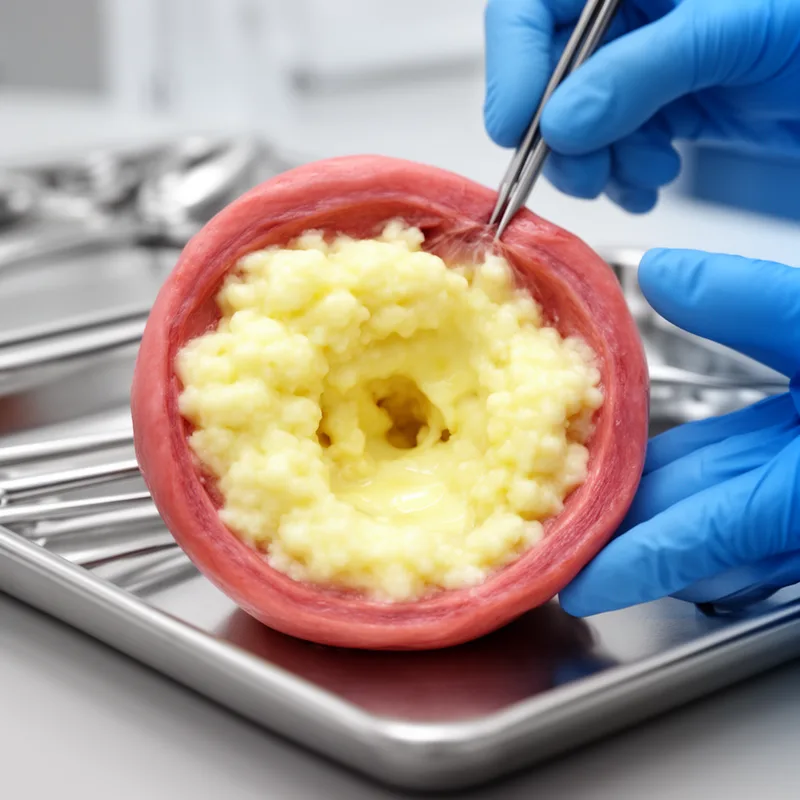
to caseate
9.9
To turn into a soft cheese-like mass because of rot
- verb
- /ˈkeɪsiˌeɪt/
- Specialized
:
caseificar
- Tuberculous lesions often caseate at their centers, giving a cheese-like appearance.
Examples
-
Pathologists observed that the lymph node began to caseate as the infection progressed.
-
If the tissue continues to caseate, it may eventually liquefy and form a cavity.
-
The milk began to caseate after being left out.
-
The cheese will caseate if not stored properly.
-
Pathologists observed that the lymph node began to caseate as the infection progressed.
-
Tuberculous lesions often caseate at their centers, giving a cheese-like appearance.
-
If the tissue continues to caseate, it may eventually liquefy and form a cavity.
Surface Forms
Etymology
Caseate comes from the Latin root caseus, which means 'cheese'. In medicine it describes tissue that becomes 'cheese-like' in look or feel, so to caseate is to turn into a soft, cheesy mass.

