

carboxyl group
- noun
- /kɑrˈbɒksɪl ɡruːp/
- Specialized
- When a protein is formed, the carboxyl group of one amino acid bonds with the amine group of another.
Loading YouTube…
Watch on YouTubeSo you get tryptophan, you remove the carboxyl group, you get tryptamine.
- So you get tryptophan, you remove the carboxyl group, you get tryptamine.
Examples
-
In organic chemistry, a carboxyl group is represented as -COOH.
-
And here we're going to lose that carboxyl group that we added on earlier.
-
And the other end is going to be the carboxyl group, COO minus.
-
So you get tryptophan, you remove the carboxyl group, you get tryptamine.
-
It's reasonable that the proximity of the positive charge to the carboxyl group that's going to be losing a proton having the plus charge here.
-
Theoretically, EDC first binds with the asp or glu carboxyl groups to form the intermediate o-acylisourea.
Academic text (2018) -
The carboxyl group at the end of the molecule gives the acid its properties.
Synonyms
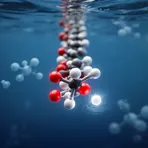
A small chemical group written COOH that makes molecules acidic
Surface Forms
Morphology
The term is compositionally built: 'carboxyl' names the specific functional moiety (–COOH) and 'group' denotes a bonded assembly of atoms, so the phrase literally means the group that is carboxyl (a –COOH functional group). Although technical, this noun+group pattern is transparent and cross-linguistically common, so a learner who knows both constituent meanings can infer the MWE meaning.
Etymology
Carboxyl group gets its name from the parts carb (from the word 'carbon') and oxyl (from words for 'oxygen' and 'acid'), so the name literally points to carbon and oxygen. It is the part of a molecule where a carbon is joined to oxygen and an 'OH' group, and that is what makes carboxylic compounds act like 'acids'.

