

capped macaque
- noun
- Indian
- The capped macaque is easily recognized by the tuft of hair on its head.
Examples
-
The capped macaque is native to the forests of northeastern India.
-
I saw a capped macaque at the zoo.
-
Researchers studied the behavior of several capped macaques in their natural habitat.
-
The capped macaque is native to India.
-
Researchers studied the behavior of several capped macaques in their natural habitat.
-
The capped macaque is easily recognized by the tuft of hair on its head.
-
The capped macaque is native to the forests of northeastern India.
Synonyms

A monkey from southern India with a hat-like tuft of hair on its head
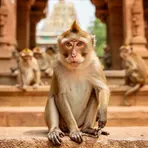
A medium-sized monkey from southern India with a rounded tuft of hair on its head
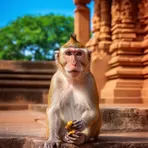
A monkey with a tuft of hair on its head that lives in southern India

A monkey from India with a small crown of hair on its head
Surface Forms
Morphology
The phrase is directly compositional: 'capped' (covered on top, like wearing a cap) modifies 'macaque' (a monkey), so a learner who knows both words can infer it denotes a macaque with a cap-like tuft of hair. This adjective+noun descriptive pattern is common and predictable cross-linguistically, making the meaning transparent to B1 learners.
Etymology
The compound noun capped macaque comes from the monkey's look: it has a small, cap-like bunch of hair on its head. The word capped suggests 'wearing a cap' and macaque is a type of monkey, so the name means this species of monkey with a little 'cap' of hair.

