
candy egg


 1
1.0
1
1.0
- noun
- /ˈkændi ɛɡ/
- US
- The bakery sells homemade candy eggs in a variety of colors and flavors.
Examples
-
I found a candy egg in my Easter basket.
-
The children love candy eggs during the holiday.
-
Every year, children search for candy eggs hidden in the garden on Easter morning.
-
I bought a box of chocolate candy eggs to share with my coworkers.
-
During the Easter celebration, the children eagerly searched for colorful candy eggs hidden around the park.
-
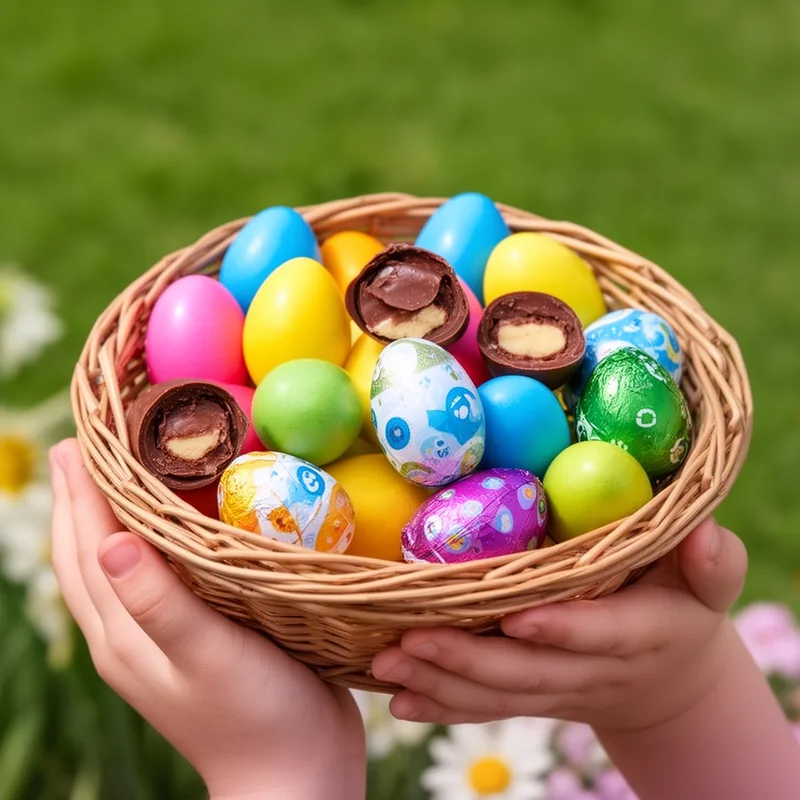
The basket was filled with delightful candy eggs, each one decorated with vibrant patterns and flavors.
-
At the party, every child received a candy egg as a sweet treat to enjoy after the games.
Synonyms
 863
1.0
863
1.0
A small sweet made from sugar, often with chocolate or nuts
 20
1.0
20
1.0
A decorated or chocolate egg given at Easter
 1
1.0
1
1.0
A sweet made of chocolate in the shape of an egg

A small egg-shaped sweet made of soft jelly with a sugar coating often eaten at Easter
Surface Forms
Morphology
The meaning 'a sweet shaped like an egg' is directly and transparently derived from combining 'candy' (a sweet) with 'egg' (an egg-shaped object), so the phrase simply denotes a confection in the form of an egg. This noun+noun compositional pattern is common and cross-linguistically regular, so a B1 learner who knows both words will readily infer the intended meaning.
Etymology
The noun candy egg comes from the simple image of a sweet (candy) made in the shape of an egg. People give these chocolate 'eggs' as a 'treat' at 'Easter' and hide them in egg hunts, so the phrase now means a small sweet shaped like an egg often given at 'Easter'.