
campylotropous
- adjective
- Specialized
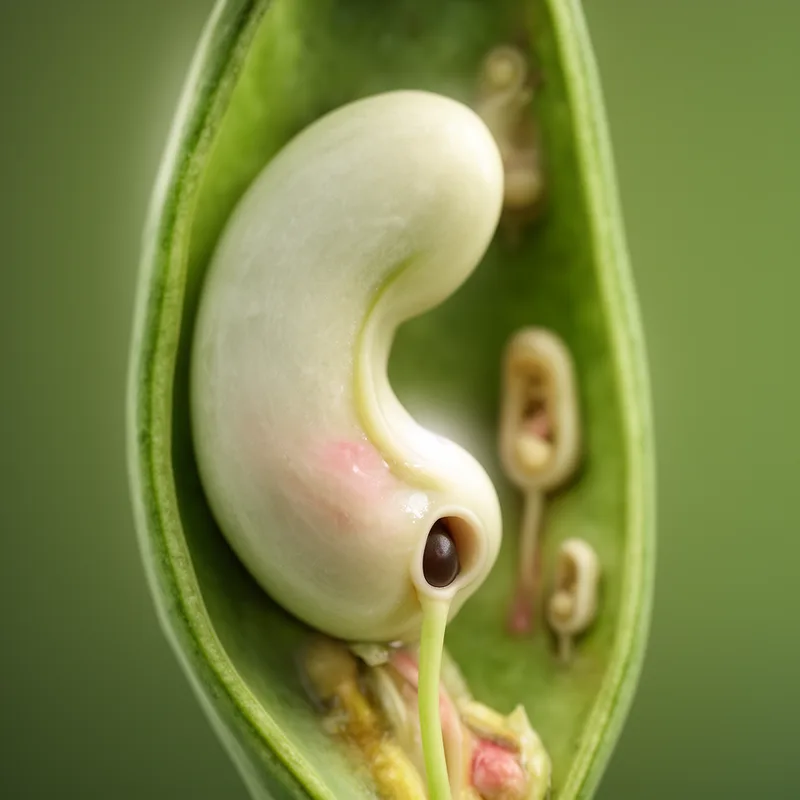
- The campylotropous design of the ovule ensures that the micropyle is positioned close to its stalk.
Examples
-
Many legumes produce campylotropous ovules, which are distinctively curved inside the ovary.
-
Researchers compared straight and campylotropous ovules to study their evolutionary advantages.
-
The campylotropous structure allows efficient nutrient flow between the ovule and its stalk.
-
The campylotropous ovule is unique in its structure.
-
Plants with campylotropous ovules exhibit interesting growth patterns.
-
Many legumes produce campylotropous ovules, which have a curved shape that enhances nutrient transfer.
-
In various plant species, campylotropous ovules demonstrate distinct curvature that aids in reproductive efficiency.
Antonyms
Compounds
- Specialized
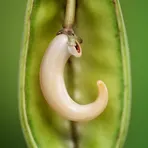
An ovule whose body curves so its opening nearly touches the stalk
Surface Forms
Morphology
campylotropous = campylo + trop + ous
Formed from specialized Greek combining forms (campylo- 'bent' + trop- 'turn' + -ous) used in technical botanical terminology, so learners cannot reliably derive the meaning from familiar English bases.
Etymology
Campylotropous comes from Greek parts kampylos 'curved' and tropos 'turn', so it means 'curved and turned'. That's why a campylotropous ovule is bent so its small opening is near and almost touching the stalk.

