
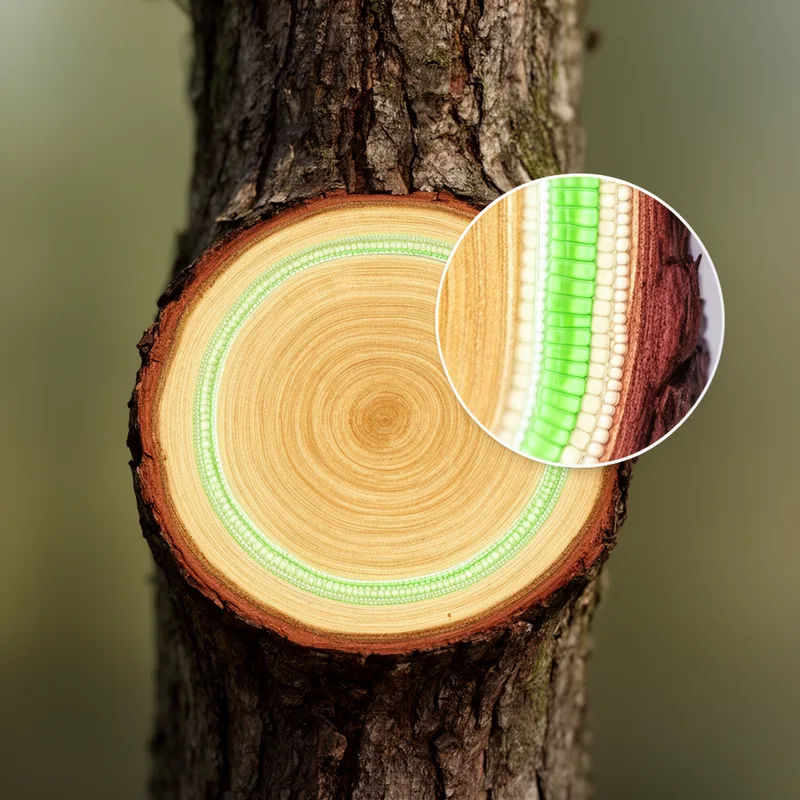
cambium


 1
9.9
- noun
- /ˈkæmbiəm/
- Specialized
- During spring, the cambium layer begins to divide rapidly, allowing the tree to grow.
- bark to the cambium
Examples
-
A female beetle spends considerable time chewing a small groove and hole through the bark to the cambium.
Academic text (2000) -
The phloem- and wood-borer guild included species that feed aboveground on phloem, cambium, or wood.
Academic text (2010) -
Once you get that green cambium layer, that can really help.
-
As you can see there, the cambium layer is green.
-
However, federal land agencies or local ordinances may prohibit climbing spikes because of the potential for damage to the trees' cambium layer, which in turn can lead to disease.
Blog text (24) -
Five years later, Swedish studies suggested the nitrogen content of bark (including cambium) was the main source of organic nitrogen for fungi attacking whole-tree wood.
Academic text (2000) -
The osteogenic cells proliferate from the deep cambium layer of the periosteum to establish early fracture callus.
Academic text (2003) -
He also reported that sapwood, the outermost layers of wood (including the cambium layer), usually decayed more rapidly than "heartwood," the central core of a tree.
Academic text (2000) -
The modifications found on CMTS reflect a variety of Aboriginal resource extraction (e.g., bark-stripping, cambium harvesting) and logging practices.
Academic text (2005) -
The cambium is responsible for the growth of new bark on the tree.
Surface Forms
Etymology
Cambium comes from the Latin word cambiare, meaning 'to change' or 'exchange'. The cambium is the thin layer in plants that makes new wood and bark, so thinking of it as the plant's 'change' layer helps you remember it is where growth and repair happen.