
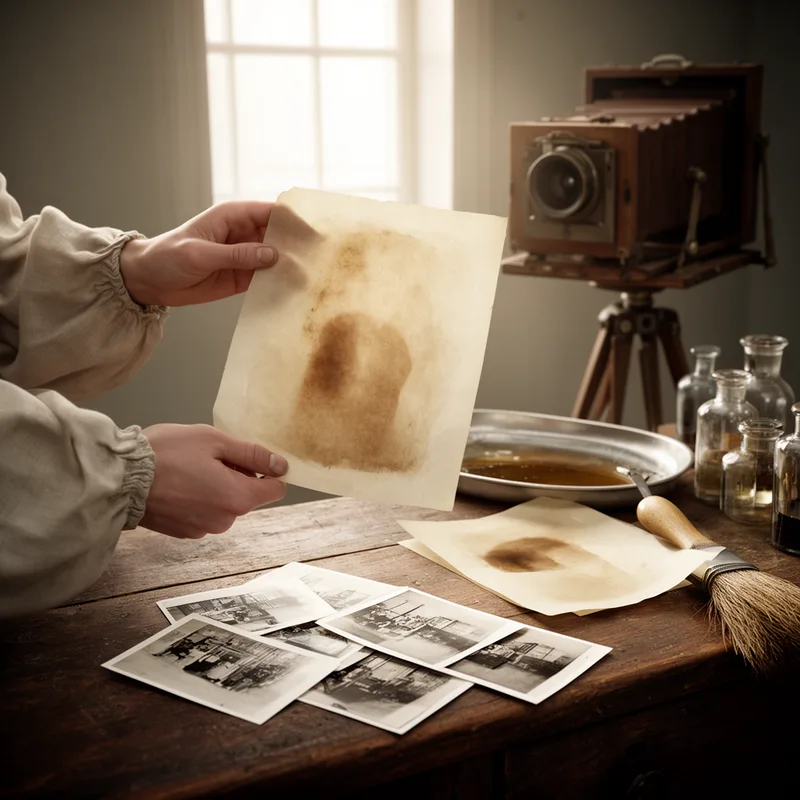
calotype
- noun
- /ˈkæl.əˌtaɪp/
- Archaic
- The artist admired the softness of the images produced by the calotype, contrasting them with modern photographic methods.
Examples
-
The museum displayed several stunning photographs created using the calotype process.
-
In sixty-one, any soldier with a dollar and seventy-five cents could have his aspect recorded in the form of ambrotype, tintype, calotype, or daguerreotype.
Fiction book (1997) -
They are outstanding examples of the calotype process, with its characteristic softness, suppression of detail, and uncluttered composition, in contrast to the hard, clear precision of the earlier daguerreotype or the emerging collodion process.
Academic text (2006) -
Many photographers in the 19th century experimented with the calotype technique for its unique aesthetic.
Synonyms

 106
1.3
106
1.3

A photo printed on paper from a negative or digital file
Surface Forms
Morphology
Etymology
Calotype comes from Greek roots kalos meaning 'beautiful' and typos meaning 'impression' or 'mark', and the typos root is the same as our English type. A photographer named William Henry Fox Talbot gave the name to his early paper photo process, so a calotype is literally a 'beautiful impression' and now means an early kind of photograph.