
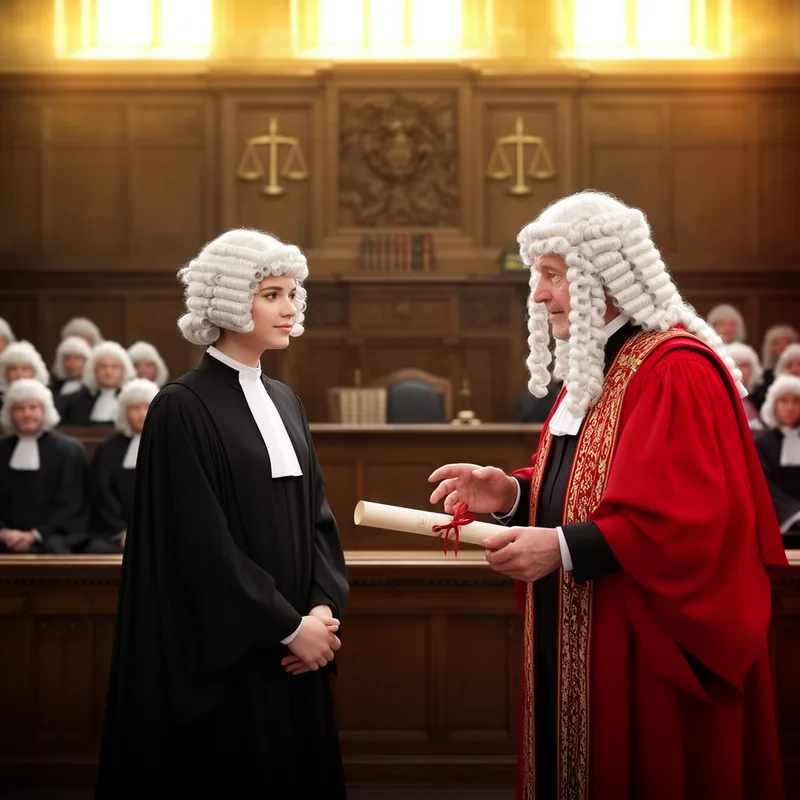
to call to the bar


 1
8.9
1
8.9
- idiom
- /kɔːl tə ðə bɑː/
- UK
- He celebrated his achievement with friends when he was called to the bar and became a practicing barrister.
Examples
-
After years of studying law, she was finally called to the bar and ready to represent clients in court.
-
I was called to the bar in London... and enrolled at the High Court of Chancery.
-
Thirty-six years, four months since the day we were called to the bar, and you've never once talked about India.
-
He was called to the bar in 1685, though he never seems to have practiced law.
Academic text (2018) -
Following his graduation, he was called to the bar and was excited to start his new career in law.
Surface Forms
Morphology
If a learner knows 'call' (to summon) and 'bar' (the legal community), they can plausibly infer a meaning like 'being summoned/admitted to the legal profession', so there is a clear link to constituent meanings. However, this is an institutionalized legal phrase whose specific procedural sense ('to be admitted as a barrister') is conventional and culture-bound, so the exact meaning is not fully predictable without exposure.
Etymology
The verb call to the bar comes from old courtrooms where a low wooden bar kept the public away from the lawyers, and a student was formally 'called' forward to cross that bar and speak in court. So today call to the bar means 'to be allowed to practice law in court'.