
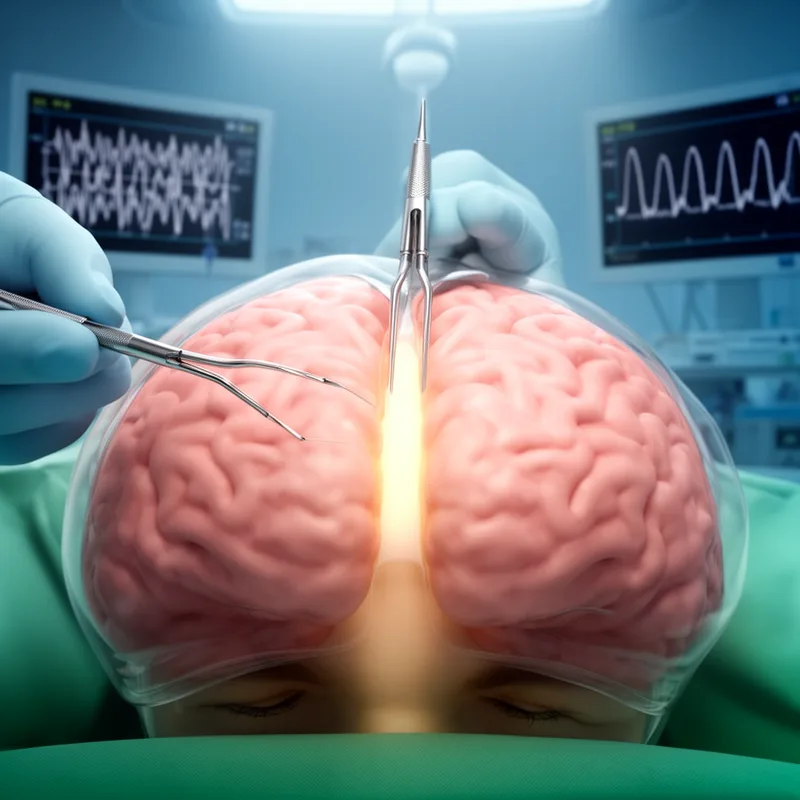
callosectomy
- noun
- /ˌkæl.əˈsɛk.tə.mi/
- Specialized
- The doctor performed a callosectomy to help control the patient's seizures.
Examples
-
After undergoing a callosectomy, the patient's epileptic episodes decreased significantly.
-
The neurosurgeon recommended a callosectomy for the patient with severe uncontrolled seizures.
-
A callosectomy is generally considered when medications fail to control epilepsy.
-
After the callosectomy, the patient experienced fewer seizures.
-
A callosectomy is usually performed when other treatments for epilepsy have not been effective.
-
Many patients report a significant reduction in seizure frequency after a callosectomy.
-
The callosectomy aimed to improve the quality of life for individuals with debilitating seizures.
Synonyms

 24
4.1
24
4.1

An operation on the brain to treat illness or injury

A surgery that cuts the tissue connecting the two halves of the brain to reduce severe seizures from epilepsy
A surgery that cuts the connection between the two halves of the brain
An operation that cuts the connections between the two halves of the brain to reduce severe seizures
How Invasive
- Specialized

- Specialized
24
4.1
- Specialized
7
9.5
- Specialized
4
3.6
- Specialized
3
3.7
Surface Forms
Morphology
callosectomy = callos + ectomy
This is a specialized medical formation using the classical combining form callos- plus the surgical suffix -ectomy, so the meaning is not recoverable for an average learner from everyday English parts.
Etymology
Callosectomy comes from callos-, from the name corpus callosum, the thick band that joins the two halves of the brain, and -ectomy, which means 'cutting out' and appears in appendectomy. So a callosectomy is a surgery to cut that band and stop messages between the two sides of the brain.