

callithump parade
- noun
- /ˈkælɪθʌmp pəˈreɪd/
- Archaic
- The annual callithump parade filled the streets with laughter, clanging pots, and outlandish costumes.
Examples
-
Children joined the callithump parade, banging drums and whistles to make as much noise as possible.
-
Residents prepared for the callithump parade by decorating their bikes and collecting noisy objects to contribute to the festivities.
-
The annual callithump parade was a huge success!
-
Everyone enjoyed the callithump parade last Saturday.
-
The streets were alive with the sounds of the callithump parade, as participants blew horns and played drums.
-
During the callithump parade, people of all ages danced and played loud instruments, creating a festive atmosphere.
-
As the callithump parade passed by, the lively music and joyful cheers echoed throughout the neighborhood.
Synonyms

A noisy parade with music, shouting, and people playing homemade instruments
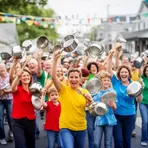
A noisy, lively parade where people bang pots and pans to celebrate
How Noisy
 24
3.2
24
3.2


- Archaic
1
3.1
427
2.2
54
4.1
Surface Forms
Morphology
The meaning is directly and compositionally derived from 'callithump' (a festive, noisy event) combined with 'parade' (a public procession), so a learner who knows both constituents can infer 'a noisy, rowdy procession.' This follows a standard noun+noun modification pattern and is therefore transparent, even though 'callithump' itself is rare.
Etymology
Callithump parade comes from old street groups who would call (shout) and thump (beat pots and drums) as they walked through town. That loud, silly picture is why the phrase means 'a noisy and rowdy parade'.