
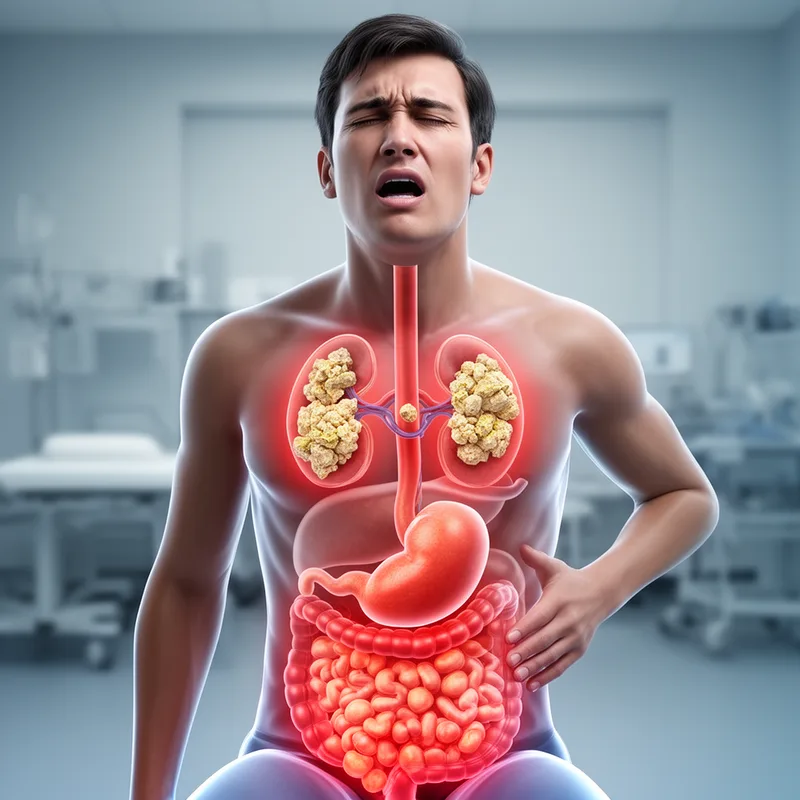
calculous


 1
9.9
- adjective
- /ˈkæl.kjə.ləs/
- Specialized
- After the scan, it was confirmed that she had a calculous gallbladder requiring surgery.
- calculous cholecystitis
- acute calculous
- cholecystectomy for acute calculous
Examples
-
Postoperative antibiotics vs. no postoperative antibiotics after cholecystectomy for acute calculous cholecystitis.
Academic text (2014) -
Many patients suffer from calculous conditions that can lead to severe pain.
-
In patients having cholecystectomy for acute calculous cholecystitis, postoperative antibiotics did not reduce infection.
Academic text (2014) -
In patients having cholecystectomy for acute calculous cholecystitis, do postoperative antibiotics reduce infection compared with no postoperative antibiotics?
Academic text (2014) -
The 2013 Tokyo Guidelines recommend antibiotic therapy after cholecystectomy for patients with mild to moderate acute calculous cholecystitis (1).
Academic text (2014) -
The doctor explained that calculous formations in the kidneys can cause urinary obstruction.
Surface Forms
Morphology
Etymology
Calculous comes from the Latin calculus, which means 'small stone' and gave us calculate and calculus because people once used pebbles to count. So calculous means 'caused by' or 'full of' small stones in the body, like kidney or gall stones.