
calcium octadecanoate
- noun
- /ˈkæl.si.əm ɒkˌteɪ.dəˈkeɪ.noʊ.eɪt/
- Specialized
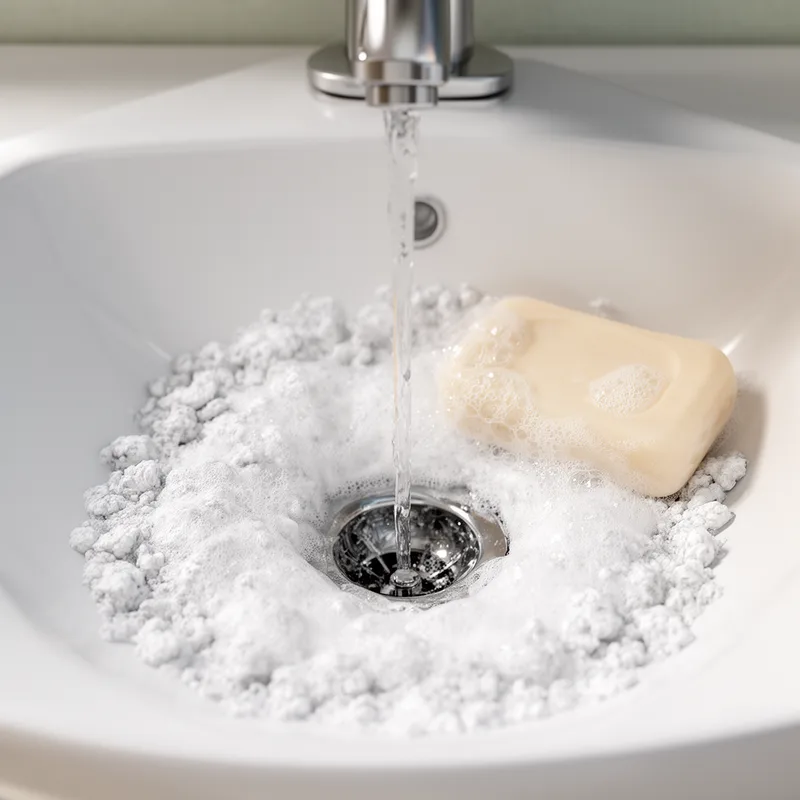
- When hard water is used with soap, calcium octadecanoate forms as an insoluble residue.
Examples
-
Chemists analyzed the scum and identified it as calcium octadecanoate.
-
The buildup of calcium octadecanoate in pipes is a common problem in areas with hard water.
-
The chemist analyzed the calcium octadecanoate in the sample.
-
In hard water, calcium octadecanoate can form a scum.
-
The buildup of calcium octadecanoate in pipes is a common problem in areas with hard water.
-
When hard water is used with soap, calcium octadecanoate forms as an insoluble residue.
-
In hard water, calcium octadecanoate can form a scum.
Synonyms

A white powder that does not dissolve in water and helps things move and flow better
Surface Forms
Morphology
calcium + octadecanoate
The term follows regular chemical naming (metal + -ate anion) so its meaning — a calcium salt of octadecanoic/stearic acid — is compositionally predictable to anyone with basic chemistry knowledge. However, the second constituent 'octadecanoate' is technical (and absent from the provided dictionary), and the '-ate' naming convention and acid→salt mapping are unlikely to be known by an average B1 learner, so the expression is only partially transparent.
Etymology
Calcium octadecanoate is named from two parts: calcium, a metal, and octadecanoate, the fat-like part that comes from an 18-carbon acid. When soap meets 'hard water', the calcium joins the fat parts and makes a white 'soap scum' that does not dissolve, so the name explains why it appears as that residue.

