
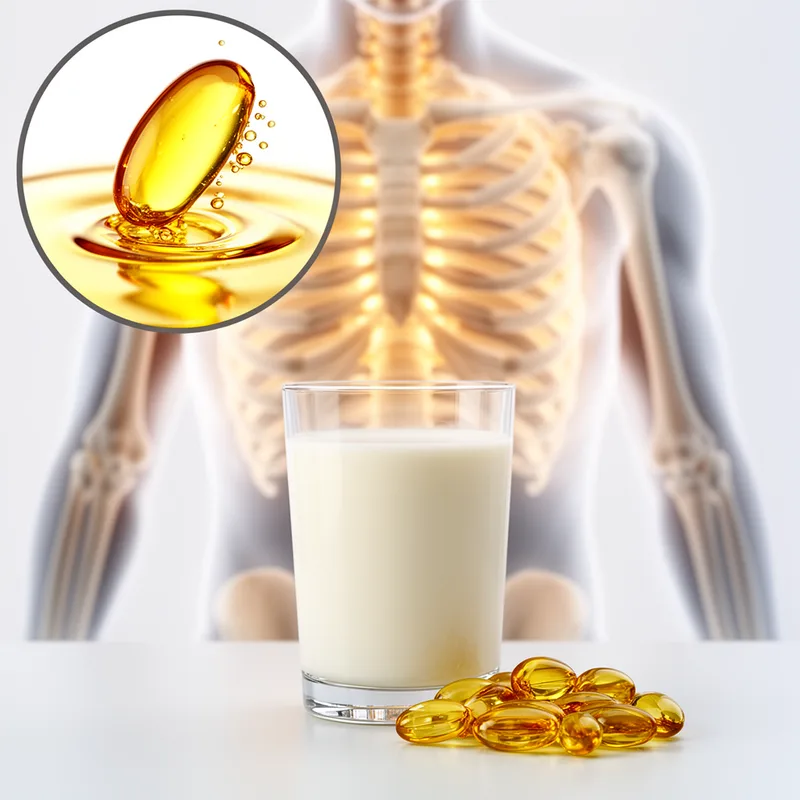
calciferol
- noun
- /ˌkæl.sɪˈfɛr.ɒl/
- Specialized
- Doctors often recommend calciferol to help improve bone health, especially in children.
Examples
-
A deficiency in calciferol can lead to conditions like rickets in young children.
-
Many breakfast cereals are fortified with calciferol to ensure adequate vitamin D intake.
-
It should say choli calciferol on the pill bottle.
Synonyms

 23
3.5
23
3.5

A vitamin that helps the body use calcium to build strong bones
 21
2.5
21
2.5
A substance that helps the body use calcium to keep bones and teeth healthy

A type of vitamin D that prevents lack of vitamin D and treats weak bones in children
A form of vitamin D that helps keep bones healthy

A vitamin D medicine that prevents or treats weak bones in children
Surface Forms
Morphology
calciferol = calci + ferol
A technical biochemical name made from combining forms (e.g., calci- + -ferol) that are not standalone English words and will not transparently indicate meaning to an average B1 learner.
Etymology
Calciferol comes from the parts calci- meaning 'calcium' and -fer- meaning 'to carry', plus -ol as a common chemical ending. So the name suggests 'a substance that carries calcium', which helps explain why calciferol is a vitamin important for keeping bones strong.