
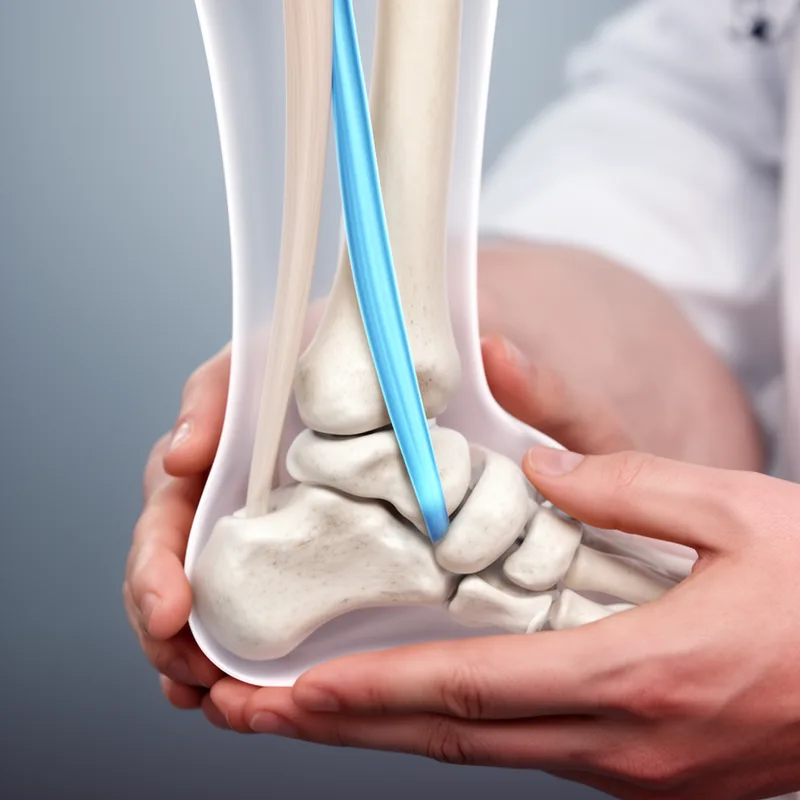
calcaneofibular
- noun
- /ˌkæl.kə.ni.oʊˈfaɪ.bjʊ.lər/
- Specialized
- The calcaneofibular ligament stabilizes the ankle by connecting the fibula to the heel bone.
- calcaneofibular ligament
Examples
-
The anterior talofibular and calcaneofibular ligaments are the major ligaments that contract to resist ankle inversion.
Academic text (2003) -
The calcaneofibular ligament (CFL) is the second important structure that provides ankle stability.
Blog text (8) -
Although the calcaneofibular ligament is rarely involved with an isolated injury, it is common to see an isolated injury to the anterior talofibular ligament (Cass & Settles, 1994).
Academic text (2003) -
Injury to the calcaneofibular ligament can lead to severe ankle instability.
-
Doctors often examine the calcaneofibular ligament to assess ankle joint health.
Surface Forms
Morphology
Etymology
The word calcaneofibular comes from calcaneus ('heel') and fibula ('thin leg bone'), and it names the ligament that joins the fibula to the heel, which is why this ligament helps keep the ankle steady.

