
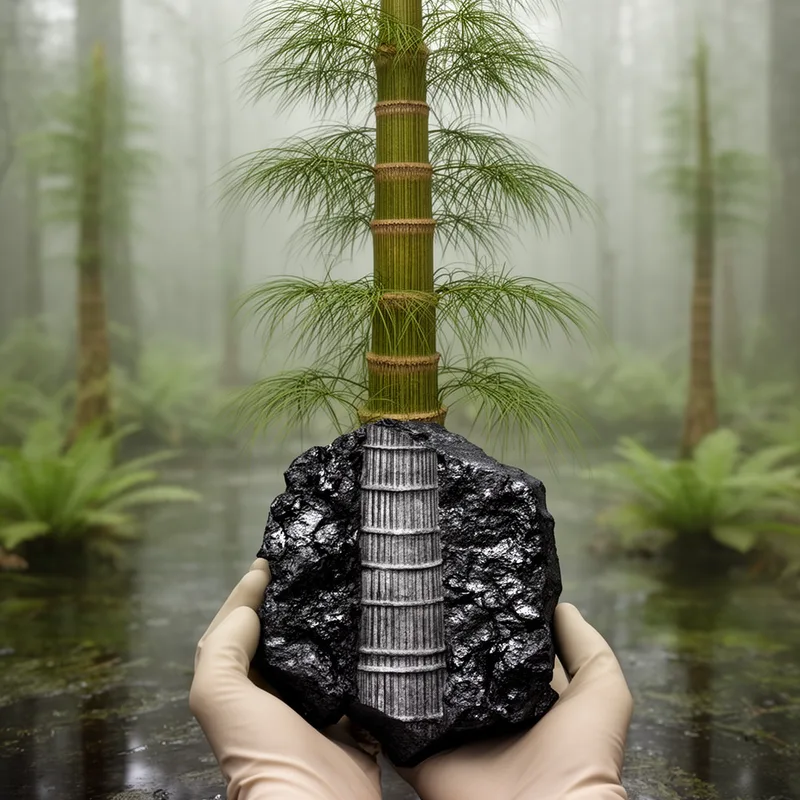
calamite


 1
9.9
- noun
- /ˈkæl.ə.maɪt/
- Specialized
- The calamite was a significant plant during the Carboniferous period.
Examples
-
Many coal mines contain fossils of calamite plants from millions of years ago.
-
A well-preserved calamite can reveal much about prehistoric plant life.
-
The paleontologist carefully examined the calamite embedded in the ancient rock layer.
-
Many calamites have been discovered in coal deposits.
-
The fossilized remains of a calamite were discovered in the coal mine, offering insight into ancient plant life.
-
Paleontologists studied the large calamite trunk found in the Carboniferous rock layers to understand its growth patterns.
-
In the museum, we saw an impressive display of a calamite fossil, illustrating how these tree-like plants once dominated the landscape.
Surface Forms
Etymology
Calamite comes from the Latin word calamus, which means 'reed' or 'hollow stem'. Because these plants had tall, reed-like stems, the name helps you remember that a calamite is an ancient, tree-like plant known from fossils often found in coal.