
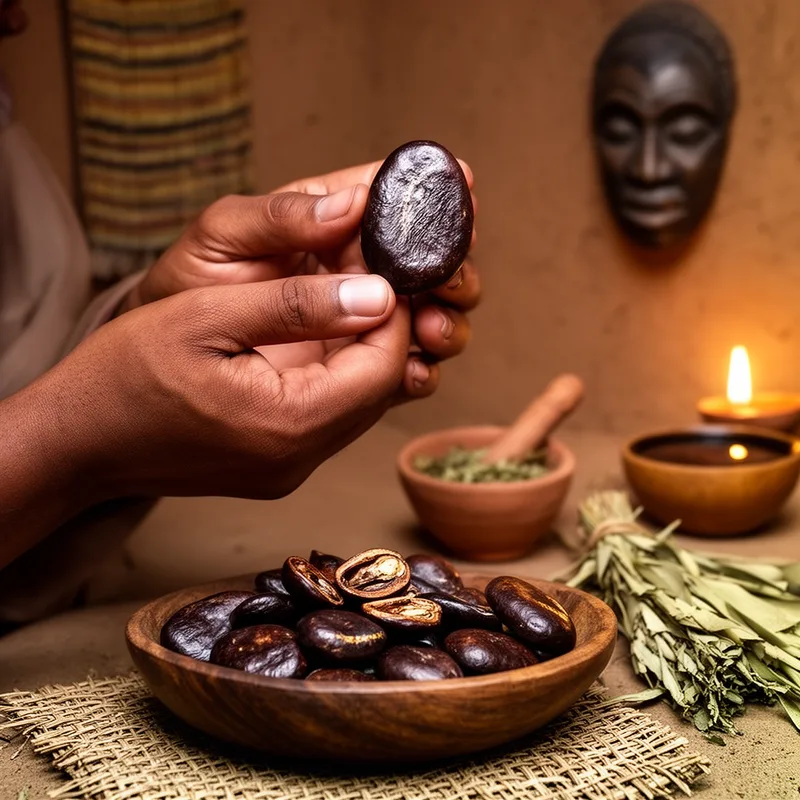
calabar bean
- noun
- /ˈkæləbɑr bin/
- UK
- Physostigmine, a drug used to treat glaucoma, is extracted from the calabar bean.
Examples
-
The calabar bean was historically used as an ordeal poison in West Africa.
-
The highly toxic nature of the calabar bean made it a feared component in traditional rituals.
-
Physostigmine, a drug used to treat glaucoma, is extracted from the calabar bean.
-
The calabar bean is known for its toxicity.
-
Many traditional healers used the calabar bean in their practices.
-
The calabar bean was historically used as an ordeal poison in West Africa.
-
The highly toxic nature of the calabar bean made it a feared component in traditional rituals.
Synonyms

A dark brown seed from a West African vine that is very poisonous and used in medicine and guilt trials
Surface Forms
Morphology
calabar + bean
The form is compositionally 'Calabar' (a place/name) + 'bean', so a learner who knows the constituents can infer it is a type of bean likely associated with Calabar (i.e., origin), but the crucial property — that it is a highly poisonous seed and a source of physostigmine — is not derivable from those constituents. Because the compound signals category/origin but not the specialised, non-obvious toxic meaning, it is only partially predictable to a B1 learner.
Etymology
Calabar bean gets its name from the town of Calabar in West Africa, where people first found this dark, deadly seed. Traditional healers used the bean in medicine and sometimes as a 'trial' poison: swallowing it could make a person very sick or die, so today the name means a small, highly poisonous seed and the drug made from it.

